Retail and FMCG brands in emerging markets are operating in a paradox. Mobile penetration is high, data usage is uneven, and consumers expect personalization even on basic devices. Amid this complexity, location-driven engagement has quietly become one of the most reliable growth levers. Not flashy. Just effective.
At the center of this shift is proximity-based communication, especially SMS and USSD. These channels remain universally accessible, trusted, and responsive. When paired with accurate location intelligence, they allow brands to engage customers at the exact moment relevance peaks. That moment could be when a shopper walks past a store, enters a busy market, or travels through a high-demand neighborhood.
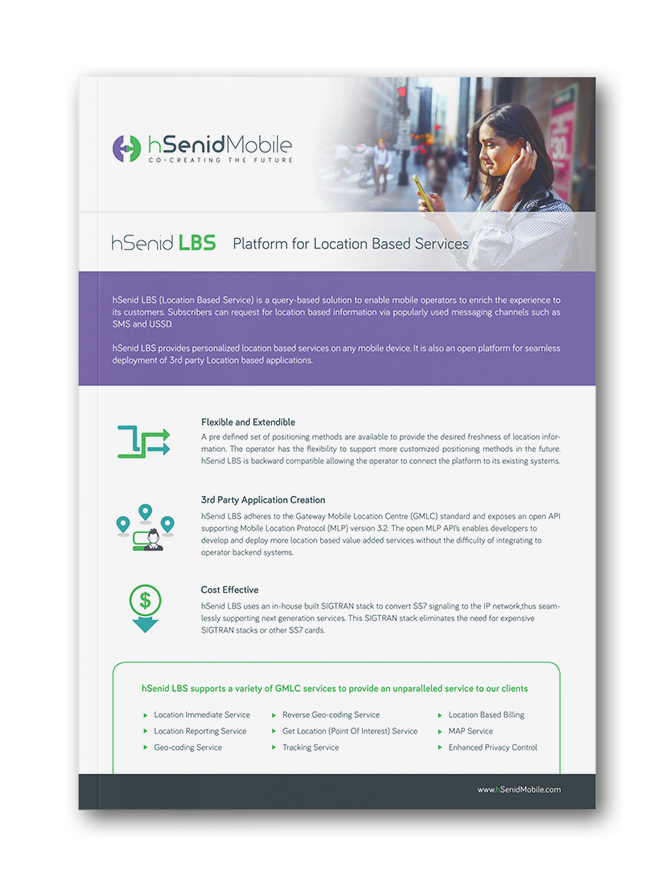
This is where hSenid LBS comes in. Designed as a query-based, operator-grade platform, it enables mobile subscribers to request and receive location-based information through everyday messaging channels. More importantly, it gives enterprises a scalable foundation to deploy high-impact proximity campaigns without excluding users on basic phones.
Why Proximity SMS Marketing Matters More in Emerging Markets
In many emerging economies, smartphones coexist with feature phones. Mobile apps coexist with USSD menus. This hybrid environment changes how marketing works.
While app-based push notifications dominate mature markets, SMS remains the most consistent engagement channel in regions where mobile data costs fluctuate and device capabilities vary. According to GSMA, over 95% of the global population lives within reach of a mobile network, but smartphone adoption is still uneven across developing regions. SMS, however, cuts across that divide.
Add location intelligence, and SMS transforms from a broadcast tool into a precision instrument.
Proximity SMS marketing allows brands to:
- Reach customers without requiring app installs.
- Trigger messages based on real-world movement.
- Deliver hyper-relevant offers tied to immediate context.
For retailers and FMCG companies operating on thin margins, this relevance translates directly into foot traffic, conversion, and brand recall.
How Location-Based Services Power Proximity Engagement
A modern location-based service platform connects multiple layers. It integrates with mobile operator networks, processes location queries in real time, and exposes APIs for campaign logic and third-party applications.
hSenid LBS functions as an open platform. Subscribers initiate or receive location-aware interactions through SMS or USSD. Brands and partners can deploy applications on top of this foundation without rebuilding core infrastructure.
From an enterprise perspective, working with a reliable location based service provider means gaining access to:
- Network-level location accuracy.
- Operator-grade reliability and compliance.
-
Support for both inbound queries and outbound campaigns.
This foundation is critical when scaling proximity use cases across cities, regions, or entire countries.
Core Proximity SMS Marketing Use Cases for Retail
Retail thrives on timing. A discount sent too early is ignored. Too late, it’s useless. Proximity-based triggers solve that timing problem.
Store Walk-By Promotions
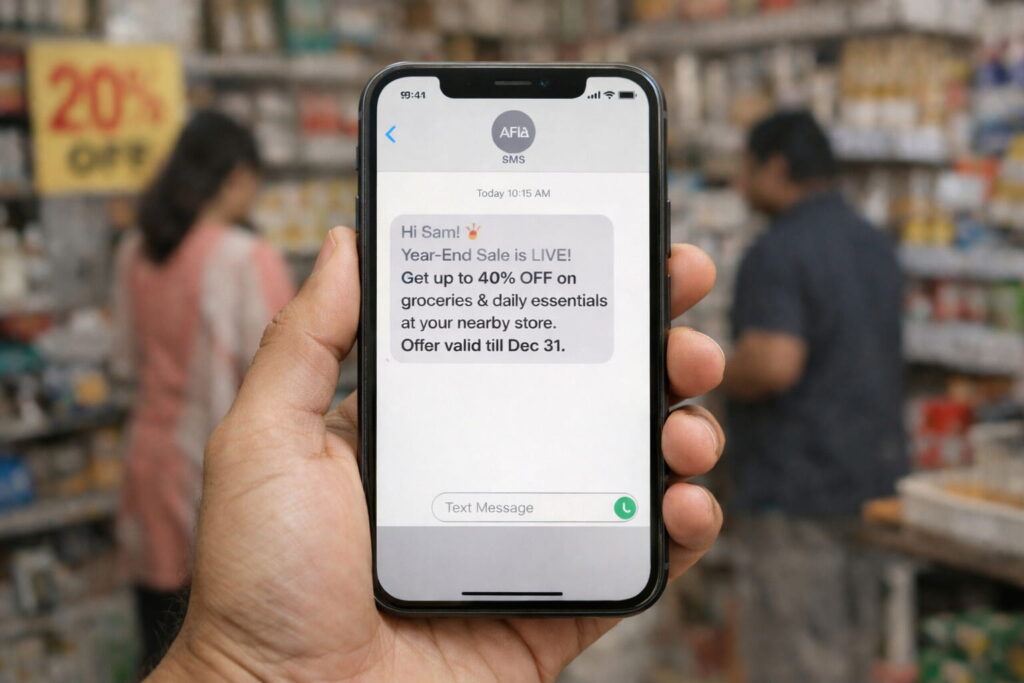
Imagine a customer walking past a shopping complex. Their phone vibrates with a simple message:
“20% off groceries at our Main Street store. Valid for the next 2 hours.”
That’s proximity SMS marketing at its most direct. No app. No opt-in friction beyond standard permissions. Just relevance.
Retailers using location-triggered messages consistently see stronger engagement compared to traditional bulk SMS campaigns. When messages are timely and contextually relevant, proximity-based outreach becomes a powerful way to capture attention and drive immediate in-store action.
The key is restraint. One well-timed message beats five generic blasts.
Hyperlocal Inventory Awareness
Stock availability varies by location, especially in distributed retail networks. Proximity messaging bridges that gap.
When customers enter a defined radius around a store, brands can alert them to:
- Newly arrived products.
- Limited stock items.
-
Location-exclusive deals.
This approach reduces missed opportunities and aligns marketing with real inventory. It’s also a powerful way to support smaller outlets competing with large urban stores.
Event-Driven Retail Engagement
Sales events, pop-up stores, and seasonal promotions benefit enormously from geo targeted SMS campaigns.
By defining geofences around malls, markets, or event venues, retailers can:
- Drive immediate footfall during peak hours.
- Promote flash sales tied to local demand.
-
Capture impulse purchases without long planning cycles.
In emerging markets where events often drive concentrated traffic, this tactic delivers outsized returns.
FMCG Proximity Use Cases Beyond the Shelf
FMCG brands don’t always control the point of sale. What they do control is influence. Proximity-based messaging extends that influence into the real world.
Distributor and Retailer Enablement
FMCG campaigns often target retailers as much as consumers. Location-based messaging helps align both.
When distributors enter specific territories, they can receive:
- Priority store lists.
- Promotional instructions.
-
Localized pricing updates.
This reduces coordination delays and ensures campaign consistency across regions.
Trial and Sampling Campaigns
Sampling works best when consumers are nearby and curious. Proximity SMS makes sampling smarter.
For example:
- Shoppers near a market receive a message inviting them to a tasting booth.
- Commuters near transit hubs are alerted to free samples at nearby kiosks.
Post-Purchase Engagement by Location
After purchase, location still matters. FMCG brands can send usage tips, refill reminders, or cross-sell offers when customers revisit relevant locations.
This turns one-time buyers into repeat customers without relying on digital loyalty apps.
The Strategic Role of Geo-Targeted SMS Campaigns
Geo targeted SMS campaigns aren’t about constant tracking. They’re about intelligent segmentation.
Brands define zones based on:
- Urban density.
- Purchasing behavior.
-
Distribution reach.
Messages are triggered only when users enter or exit these zones. The result is communication that feels helpful rather than intrusive.
From a compliance standpoint, operator-integrated platforms like hSenid LBS ensure campaigns respect local regulations and consent frameworks. That’s non-negotiable at scale.
For enterprises evaluating a location based service provider , this balance between precision and privacy is often the deciding factor.
Location-Based Advertising on Mobile Without Apps
App fatigue is real. In many emerging markets, consumers actively avoid installing brand apps due to storage limits or data costs.
Location based advertising mobile strategies that rely on SMS and USSD bypass this barrier entirely.
They offer:
- Universal reach across device types.
- No dependency on mobile data.
-
Faster time to market for campaigns.
This model also aligns with operator partnerships, enabling brands to tap into verified location signals rather than inferred GPS data.
The result is higher accuracy and fewer false triggers.
Measuring Impact and ROI
Proximity campaigns are measurable. That’s part of their appeal.
Common KPIs include:
- Footfall uplift within geofenced areas.
- Redemption rates for location-triggered offers.
-
Repeat visits tied to location-based follow-ups.
Compared to generic SMS, location-based messaging delivers meaningfully better engagement and conversion results for retailers.
The key is integrating campaign data with sales and distribution systems. hSenid LBS supports this through open APIs and third-party application deployment.
Choosing the Right Location-Based Service Platform
Not all platforms are created equal. Some rely on app-level permissions. Others depend on fragmented data sources.
A robust location based service provider should offer:
- Network-level location access via mobile operators.
- Support for SMS and USSD interactions.
- Scalability across regions and partners.
-
An open architecture for third-party innovation.
hSenid LBS was built with these principles in mind. It enables operators and enterprises to launch, test, and scale location-based applications without reengineering their core systems.
For organizations planning long-term proximity strategies, this flexibility matters.
The Competitive Advantage of Context
Context is the new currency. Price still matters. Product quality still matters. But relevance often decides.
In emerging markets, where consumers navigate crowded choices and limited attention, proximity-based engagement cuts through the noise. It meets people where they are. Literally.
Retail and FMCG brands that invest early in location-driven messaging aren’t just running campaigns. They’re building contextual relationships that scale.
And that’s hard to replicate.
As proximity use cases continue to evolve, the brands that succeed will be those that combine operator-grade location intelligence with simple, trusted communication channels. SMS. USSD. No friction. Just value.
If you’re ready to explore how a proven
location based service provider
can help you activate high-impact proximity strategies across retail and
FMCG, now’s the time to take the next step.
Try it today.