

01
Paying for idle capacity
Hardware sized for the worst day of the year sits unused the rest of it, and still needs licences and support.

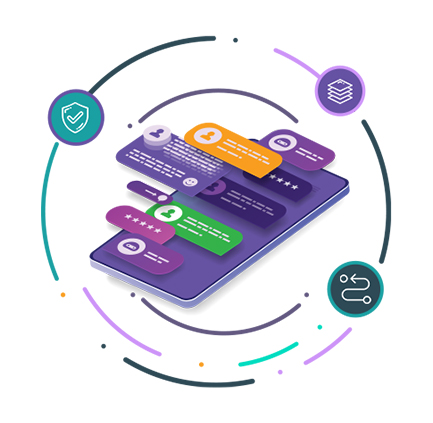
The hSenid SMSC elastic architecture for on-demand scaling minimizes costly over-provisioning and ensures capacity to meet abrupt spikes in SMS traffic. Its ability to maximize revenue, combined with its remarkable reliability, makes it the ideal solution for Telcos.
Eliminates the need to purchase an expensive third-party SIGTRAN stack or SS7 card and enables easy integration into the operator’s network
Buffers and seamlessly sends out excess capacity when messages surpass the designated Message Delivery Attempt (MDA) level in the system
Facilitates different actions, such as relay and reanalyze, by configuring routing rules through a GUI
Do Not Disturb management module offers a comprehensive solution to maintain personalized DND lists and advanced promotional control for SMS. DND module offers a user-friendly UI to manage functionalities as well as a RESTful API layer for external triggers. Apart from global SMS limits, individual users can activate DND by sending an SMS and limiting either the number of SMSs per sender address or all messages during a specified time period.


Step into the Future of Ansible powered Automation with hSenid Mobile. Download your whitepaper now!
A carrier-grade SMS center that scales with every spike.
Carry every OTP, alert and bulk campaign on an SMSC that scales on demand. hSenid SMSC gives mobile operators clustered high availability, an in-house SIGTRAN stack, full SMPP support and 4G/5G interworking, so you stop paying for idle capacity and keep every message moving when traffic surges.

SMS still carries the OTPs, alerts and campaigns your enterprise customers pay for. When the SMS center can't keep up, the loss lands on your revenue and your reputation.
Hardware sized for the worst day of the year sits unused the rest of it, and still needs licences and support.
Salary days, flash sales and login storms push traffic past capacity. Codes arrive late, users retry, and the load doubles.
One failed node or a choked message store can stall delivery for every subscriber and every enterprise client at once.
External SIGTRAN stacks and SS7 cards add licence fees, integration work and one more vendor to chase when things break.
Platforms that can't interwork with IMS and 5G cores make SMS harder to offer as your network evolves.
An elastic, clustered SMS center that scales up for spikes, scales back after, and keeps delivering through faults.
hSenid SMSC receives, processes, stores and sends every type of SMS at high message volumes and traffic rates. Its clustered architecture handles load balancing internally, so there is no single point of failure and downtime is kept to a minimum.
Scale vertically by adding resources, or horizontally by adding nodes, without interrupting service. You grow capacity as your business grows, instead of buying it up front.
Integrate straight into your network without buying a third-party SIGTRAN stack or SS7 card. Lower licence costs, tighter performance control and one vendor to call.
When traffic passes your Message Delivery Attempt (MDA) level, excess messages are buffered and sent out seamlessly instead of being rejected.
Messages are delivered first and stored after, which saves storage and keeps throughput high when traditional store-and-forward platforms slow down.
Set up new SMPP accounts and ESMEs from profiles in minutes. Connect to multiple SMSCs, load-balance between them and manage traffic from every SMPP client.
Define relay, reanalyze and other routing actions through a GUI, so your team changes traffic paths without code changes.
Real-time and offline charging for prepaid, postpaid and roaming subscribers, with detailed CDRs in flexible formats for your billing systems.
Keep personalized Do Not Disturb lists and promotional controls, with a user-friendly UI and a RESTful API for external triggers. Subscribers can opt out by SMS, per sender or for a set time window.
Sell bulk campaigns through a portal connected over the SMPP API, and earn more per message by appending text ads or ads from third-party advertising engines.
Connect to IP-SM gateways and 5G SMSF nodes, so SMS stays a universal channel across IMS and 5G as your network moves to IP.
hSenid AIOps runs across your hSenid telco platforms, including SMSC and USSD. It spots revenue leaks, finds root causes and checks changes before they go live, so your operations team spends less time firefighting and more time keeping SMS revenue flowing.
Machine learning flags applications that are burning revenue or showing risk patterns, so you act before the loss shows up in billing.
Automatically pinpoints the cause of an issue, such as a database failure or insufficient memory, at both infrastructure and application level.
Proactive risk and anomaly detection alerts your team before subscribers or enterprise clients notice a problem.
Autopilot pre-checks commands and changes and simulates their impact before they run, so risky changes are caught before they reach live traffic.
A chat interface your engineers use to query current issues and system state in plain language, instead of digging through logs and dashboards.
AI tests for bottlenecks and validates changes for you, so your team spends less time on repetitive checks and more on growing the service.
Transactions a day handled by hSenid Mobile systems.
Across hSenid platformsLower customer attrition reported by operators using DND compliance.
Source: hSenid R&DThird-party SIGTRAN stacks or SS7 cards to buy.
In-house stack includedBuilding telco platforms for operators in Asia, Africa, Australia and the USA.
Certified by Red HatOne SMS center for the traffic your enterprise customers depend on, and the services that grow your messaging revenue.
Banks, apps and public services need codes delivered in seconds. Absorb login storms and payday spikes without rejecting traffic.
Give enterprises a bulk SMS portal over the SMPP API, and add ad revenue by appending sponsor messages.
DND lists, promotional limits and SMS opt-outs keep unwanted messages down and churn low.
Carry alerts and device notifications across legacy, IMS and 5G cores from one platform.
A Short Message Service Center (SMSC) receives, stores, routes and delivers SMS across your mobile network. It still carries the OTPs, banking alerts, government notices and A2P campaigns that enterprises pay for, so its capacity and uptime directly affect your messaging revenue.
Yes. hSenid SMSC supports 4G and 5G interworking, connecting to IP-SM gateways in IMS networks and to 5G SMSF nodes, so SMS keeps working as your network moves to IP.
No. hSenid SMSC includes a SIGTRAN stack built in-house, which removes the cost of an external stack or SS7 card and makes integration with your network simpler.
Its elastic, clustered architecture scales on demand, both vertically and horizontally. Overload protection buffers messages above your Message Delivery Attempt (MDA) level and sends them out seamlessly, and forward-and-store delivery keeps throughput high under heavy load.
Yes. hSenid SMSC has full SMPP support, with SMPP profiles to set up new accounts and ESMEs easily. The SMPP gateway connects to multiple SMSCs, balances load and manages traffic from SMPP clients, and a bulk messaging portal is available over the SMPP API.
It provides real-time and offline charging for prepaid, postpaid and roaming subscribers, with detailed CDRs in flexible formats. The DND module manages personalized Do Not Disturb lists and promotional limits through a UI and a RESTful API, and subscribers can opt out by SMS. Book a demo to see it on your traffic mix.
See the modules, SMPP options, charging features and 4G/5G interworking in one place. Easy to share with your network and procurement teams.
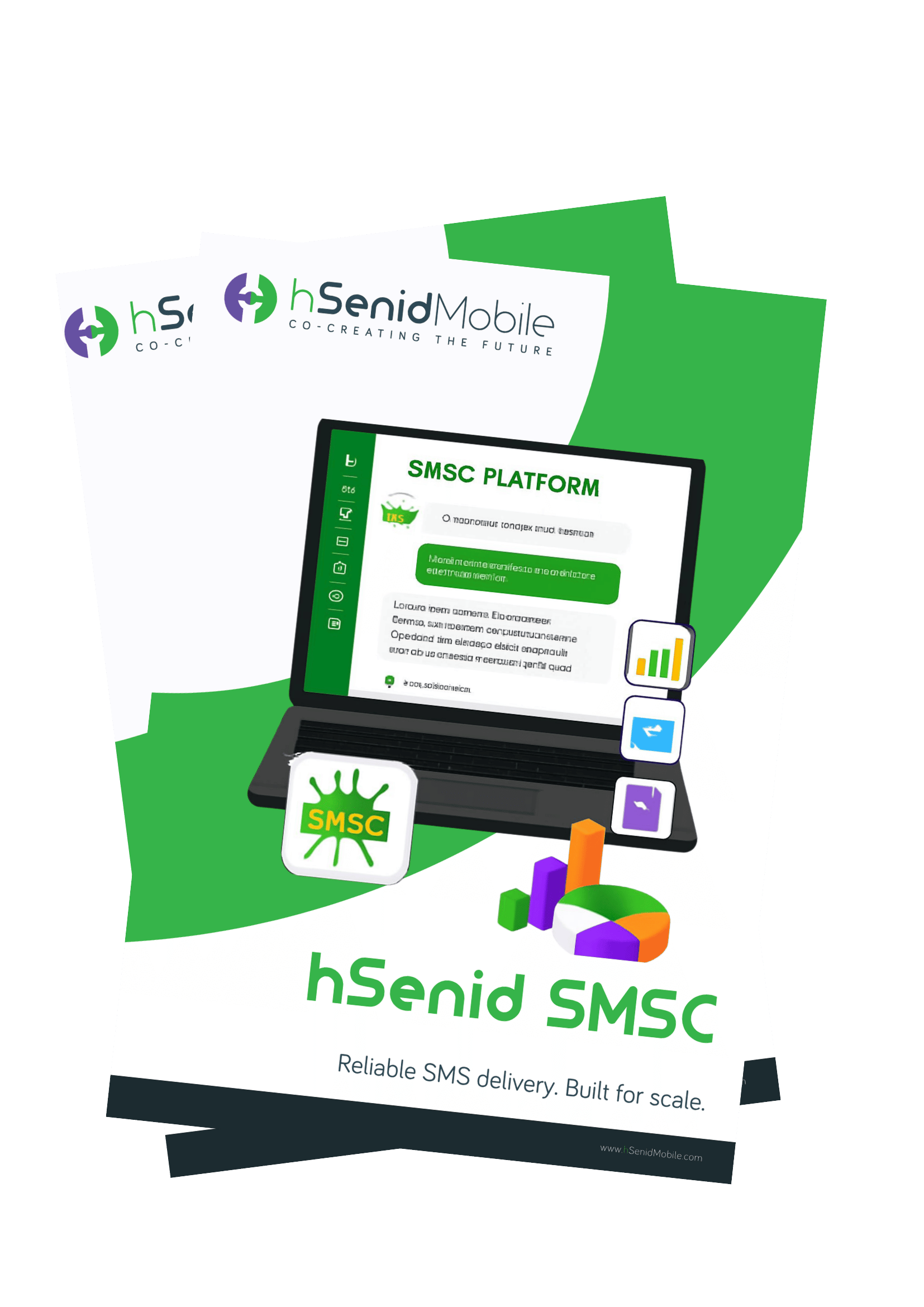
Tell us about your network and traffic mix. We'll show you how hSenid SMSC handles your peaks, your enterprise connections and your move to 5G.