
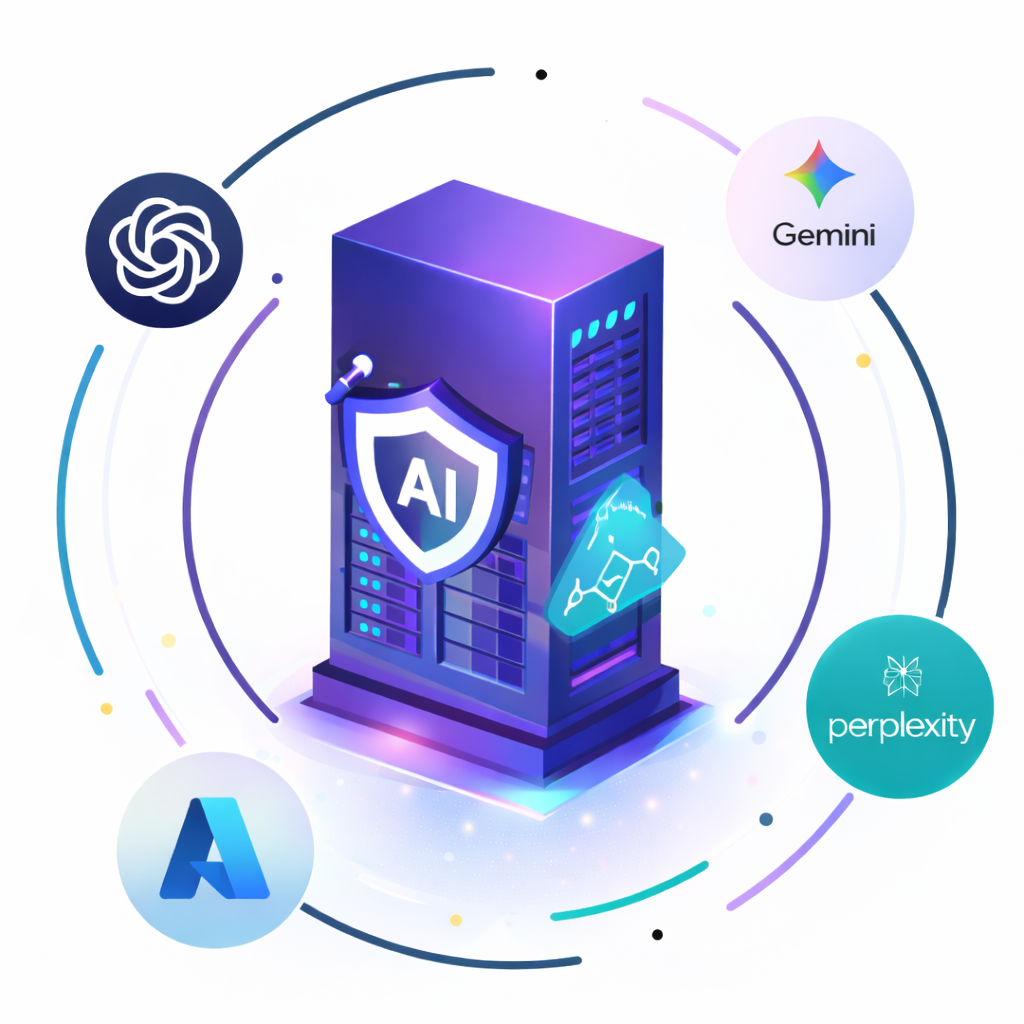
Enterprise AI adoption is accelerating, but many organisations are discovering that access to powerful models does not automatically create business value. Companies can experiment with OpenAI, Gemini, Claude, Llama, and other models in days. Turning those experiments into secure systems that employees actually use is much harder.
This is where Forward Deployed Engineers, or FDEs, can make a major difference. Instead of delivering recommendations from outside the organisation, they work directly with business and technology teams to understand workflows, connect systems, and deploy AI into real operations. Combined with a Sovereign AI approach, FDEs can help enterprises move from experimentation to measurable outcomes.
The Real Challenge Is Not Choosing an AI Model
Many AI projects begin with the question, “Which model should we use?” While model selection matters, it is rarely the biggest obstacle.
The real challenge is connecting AI to the work that matters.
A financial institution, for example, may want AI to analyse loan applications. Reading documents is only one part of the process. The system may also need to extract fields, compare information with internal records, detect inconsistencies, flag risk signals, route exceptions, and maintain an audit trail.
That requires integration, AI data privacy, security, governance, and workflow design.
An Enterprise AI Gateway can help manage access to multiple models while allowing organisations to control how requests are processed. Instead of connecting every application directly to individual AI providers, enterprises can introduce a governed layer for routing, monitoring, security, and policy enforcement.
Why Forward Deployed Engineers Matter
Traditional consulting can provide valuable strategies, architecture recommendations, and transformation roadmaps. However, enterprise AI projects often struggle when there is a gap between planning and execution.
FDEs reduce this gap because they combine engineering skills with business understanding.
They work alongside operations teams, business leaders, and technology staff to learn how processes actually function. That includes the exceptions, manual workarounds, undocumented rules, and system dependencies that rarely appear in a requirements document.
An FDE may discover that an organisation asking for an AI chatbot does not really have a chatbot problem. Employees may actually be spending hours searching for documents, interpreting policies, checking records, and routing requests.
The better solution could be an AI-powered workflow that retrieves information, applies business rules, generates recommendations, escalates uncertain cases, and records every action.
That is a much more meaningful form of enterprise AI adoption.
From AI Conversations to AI Workflows
Many organisations begin with AI assistants because chat interfaces are familiar. However, long-term value appears when AI can participate in complete business processes.
A production workflow might receive a document, retrieve information from internal systems, analyse content, apply policies, send selected tasks to different models, request human approval when necessary, update a business system, and log the entire interaction.
This requires strong Enterprise AI governance.
Organisations need visibility into which models employees are using, what data is being processed, how much each department is spending, and what actions AI systems are taking.
This is also important for Shadow AI prevention. Without central governance, employees may independently adopt external AI tools, creating data exposure, duplicate costs, and inconsistent security practices.
FDEs can help enterprises design these controls around actual workflows instead of adding governance after deployment.
Model-Agnostic AI Creates More Flexibility
No enterprise can confidently predict which AI model will be the best option several years from now.
That makes model lock-in a significant concern.
A model-agnostic architecture separates business processes from the underlying AI provider. One workflow may use OpenAI while another uses Gemini, Claude, Llama, DeepSeek, or a locally deployed model.
Effective AI model routing can select models based on cost, capability, security requirements, workload type, or data sensitivity.
This also supports better LLM cost management. Rather than sending every request to the most expensive model, enterprises can route simpler workloads to more efficient options while reserving advanced models for complex reasoning.
With Sovereign AI, organisations can maintain control over these decisions while protecting the workflows surrounding each model.
Security and Privacy Must Be Built Into the Workflow
Enterprise AI creates new security considerations.
Employees may accidentally expose sensitive information. AI agents may interact with APIs or enterprise systems. Retrieved documents may contain confidential information. Some workloads may also need to remain entirely within the organisation’s infrastructure.
Strong Enterprise LLM security therefore requires more than usernames and passwords.
Enterprises may need data masking, access controls, policy enforcement, isolated execution environments, approval rules, monitoring, and detailed audit logs.
The same principle applies to Generative AI governance. AI should not automatically make every decision simply because it technically can.
A document processing system might automatically extract and classify information but send unusual cases to an employee. A policy assistant may provide answers while escalating uncertain interpretations. A recruitment system might organise candidate information while keeping final hiring decisions with humans.
FDEs can help define these boundaries because they understand both the technical system and the business consequences.
Start With One High-Value Workflow
Trying to transform an entire organisation with AI at once creates unnecessary complexity.
A stronger approach is to begin with one workflow where measurable improvement is possible.
That might include:
- Loan document analysis
- Policy and compliance search
- CV screening
- Procurement document analysis
- Customer complaint intelligence
- Strategic research
- KYC and onboarding processes
The organisation can define clear success criteria before development begins.
Did document review become faster? Did employees recover valuable hours? Did candidate screening improve? Did teams spend less time searching for information?
At hSenid, Forward Deployed Engineers are designed to work alongside enterprise teams from workflow discovery through deployment, with a focus on achieving measurable production results within a focused engagement.
The goal is not another proof of concept.
It is a system employees can use as part of their normal work.
Building AI Capability That Lasts
A successful FDE engagement should also reduce long-term dependency.
The organisation should be left with documented systems, trained internal owners, measurable results, and a clear understanding of how the solution operates.
This matters because enterprise AI will continue evolving.
Models will change. Costs will change. Regulations will evolve. New use cases will appear.
A durable architecture allows the organisation to adapt without rebuilding everything from the beginning.
A well-designed Sovereign AI platform can provide the foundation for this flexibility by connecting multiple AI models, enterprise systems, governance policies, and deployment environments through one controlled architecture.
Turning AI Potential Into Business Results
Enterprise AI adoption is increasingly becoming an execution challenge rather than a technology-access challenge.
Companies already have access to capable models. The harder task is connecting them safely to real data, real systems, and real workflows.
Forward Deployed Engineers can bridge that gap by combining engineering, consulting, and product thinking inside the organisation itself. They identify high-value problems, build around operational realities, establish governance controls, and help move AI into production.
When supported by Sovereign AI, this approach gives enterprises a practical way to deploy AI without sacrificing control, security, flexibility, or data sovereignty.
The most important question may therefore not be, “Which AI model should we adopt?”
It may be: “Which workflow would change our business most if AI actually worked inside it?”