
Enterprise AI adoption often starts with enthusiasm and quickly becomes complicated. Teams experiment with models, business units launch isolated pilots, and security leaders begin asking difficult questions about data exposure, compliance, governance, and cost.
The challenge is no longer whether AI can create value. The challenge is deploying it in a way that is secure, controlled, measurable, and connected to the systems employees already use.
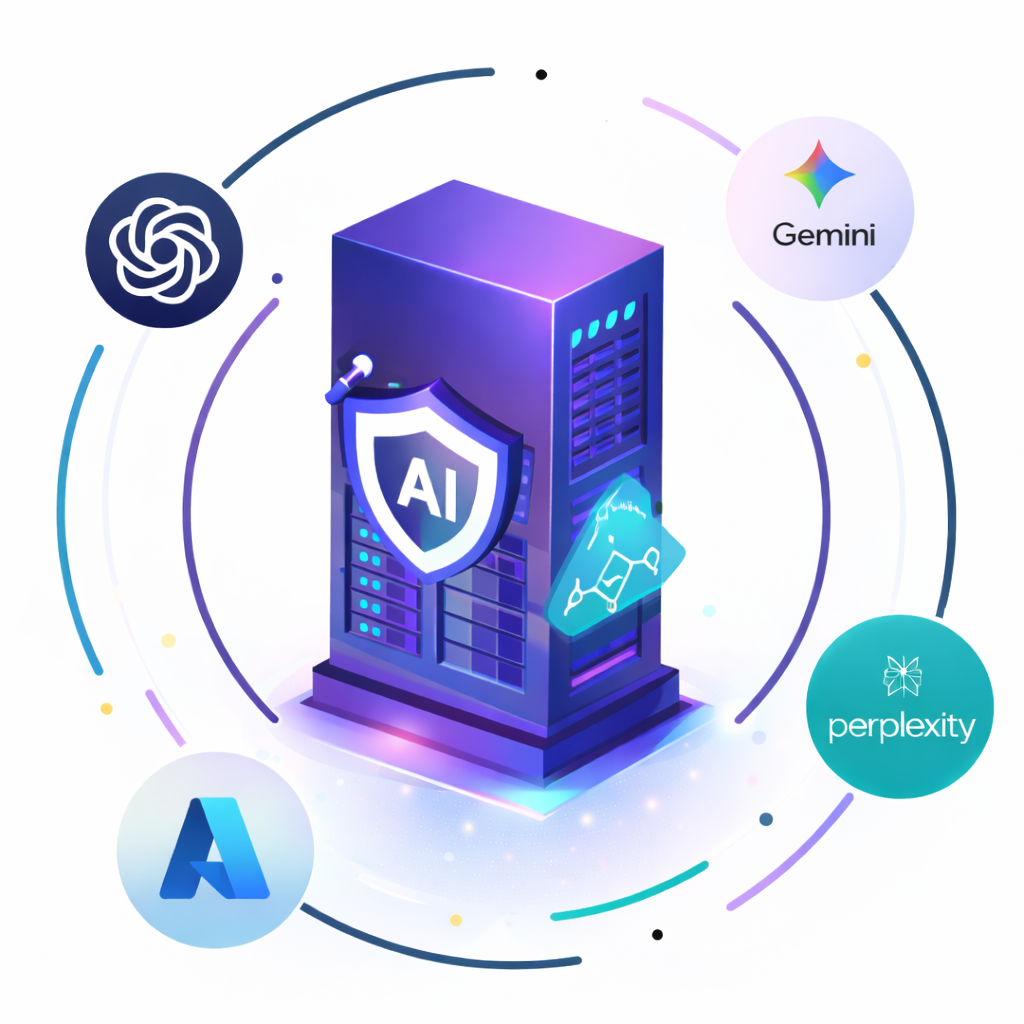
A Sovereign AI approach gives enterprises more control over how models, data, workflows, and infrastructure interact. Instead of allowing AI adoption to grow through disconnected tools, organisations can create a governed architecture where sensitive data stays protected, model usage is monitored, and AI workflows operate within defined business policies.
The key is to start focused. A practical 90-day roadmap can help enterprises move from discovery to a working production use case without trying to transform the entire organisation at once.
Days 1 to 15: Identify the Right Workflow
The first stage should not begin with model selection.
It should begin with the business problem.
Look for workflows where experienced employees spend significant time on repetitive information processing. These are often strong candidates because AI can reduce manual effort without removing critical human judgment.
Examples include loan document analysis, KYC verification, internal policy search, procurement reviews, CV screening, customer complaint analysis, and strategic research.
During this stage, business and technology teams should jointly evaluate each workflow based on volume, complexity, data availability, risk, and potential business impact.
A focused discovery process helps prevent AI initiatives from becoming technology experiments with no measurable outcome.
The enterprise should leave this phase with one clearly defined workflow and agreed success criteria.
Days 15 to 30: Map Data, Systems, and Risk
Once the workflow is selected, the next step is understanding everything surrounding it.
Where does the data come from? Which systems need to be connected? Who can access the information? What data is sensitive? Which actions require approval?
This stage is critical for AI data sovereignty and AI data privacy.
For example, a bank building an AI-powered document analysis workflow may need access to customer records, uploaded documents, internal risk policies, and case management systems. Some of that information may be unsuitable for processing by an external model.
A sovereign architecture can separate sensitive information from the model layer.
Personally identifiable information can be masked. Certain workloads can be processed using local models. Less sensitive tasks can be routed to external providers when appropriate.
This is also the right point to define Enterprise LLM security controls such as role-based access, data masking, logging, approval steps, and isolated execution environments.
Days 30 to 45: Build the Governance Layer
Governance should not be added after deployment.
By the time multiple departments are independently using AI tools, organisations may already be dealing with duplicated spending, inconsistent controls, and unapproved data sharing.
An AI Governance Gateway can provide a central control point between enterprise applications and AI models.
Through this layer, organisations can establish policies around which models can be used, what data can leave the environment, who can access specific capabilities, and how every interaction should be logged.
Strong Enterprise AI governance also gives management greater visibility into adoption.
This can support AI usage monitoring, cost tracking, audit requirements, and Shadow AI prevention by reducing the need for teams to create unmanaged AI integrations.
Governance becomes part of the architecture rather than a separate compliance exercise.
Days 45 to 60: Connect Models to Real Enterprise Systems
The next stage is where AI begins moving from demonstration to operational system.
The selected workflow should now connect to the tools employees already use.
That may include CRM platforms, HRIS systems, core banking applications, document repositories, internal APIs, or communication tools.
An Enterprise AI Gateway can help create a consistent interface between these applications and multiple AI models.
This is important because enterprises should not have to build every workflow around a single model provider.
A document processing task may work best with one model, while another model may be more suitable for internal knowledge retrieval. Highly sensitive workloads might require a local model.
Effective AI model routing allows each task to use the right model based on security, cost, capability, latency, or business policy.
The workflow remains stable even when the model changes.
Days 60 to 75: Test With Real Operational Conditions
A successful pilot needs more than clean sample data.
It needs real-world complexity.
During this phase, the system should be tested using realistic documents, user behaviours, edge cases, incomplete information, and unusual exceptions.
The objective is to discover where AI needs support from business rules or human judgment.
For example, an AI document analysis system may automatically process standard applications but escalate cases when data is missing or confidence is low.
A policy assistant may answer routine questions instantly but route ambiguous interpretations to a compliance specialist.
This is where Generative AI governance becomes practical.
Instead of asking whether AI should be allowed to make decisions in general, the organisation defines exactly what the AI can do within a specific workflow.
This creates clearer accountability and reduces operational risk.
Days 75 to 90: Deploy, Measure, and Document
The final phase should focus on production deployment and measurable outcomes.
The system should now be available to the employees responsible for the workflow, with appropriate monitoring and support in place.
Success should be measured against the criteria defined at the beginning.
The organisation may track:
-
Reduction in document processing time
-
Hours recovered from manual research
-
Faster application or candidate screening
-
Fewer repetitive tasks
-
Improved processing capacity
-
Lower AI operating costs
-
Better compliance visibility
This is also where LLM cost management becomes important.
As usage increases, organisations need visibility into how many model calls are being made, which departments generate the highest consumption, and whether expensive models are being used unnecessarily.
Routing simpler tasks to more cost-efficient models can help keep AI spending sustainable.
At the end of the 90 days, the organisation should also have complete documentation covering architecture, governance policies, integrations, ownership, performance, and future expansion opportunities.
Why Forward Deployed Engineers Can Accelerate the Roadmap
Enterprise AI projects often fail between strategy and implementation.
Forward Deployed Engineers help close that gap.
Instead of working only from requirements documents, FDEs embed with business, operations, and technology teams. They learn how the workflow actually functions, identify hidden dependencies, connect enterprise systems, and build production solutions around measurable outcomes.
The combination of engineering and business understanding is particularly useful when deploying Sovereign AI, because sovereignty is not just an infrastructure decision.
It involves data, applications, models, governance, people, and business processes.
An FDE can help bring those layers together within one deployment.
The result is a system designed for daily operational use rather than another isolated AI proof of concept.
Build for Expansion From Day One
The first deployment should remain focused, but the architecture should not become a dead end.
Once one workflow delivers measurable value, the same governance, monitoring, model routing, and integration capabilities can support additional use cases.
A bank might start with loan document analysis and later expand into policy Q&A, compliance reporting, or customer onboarding.
A telecommunications provider may begin with complaint intelligence before adding contract analysis or operational knowledge assistants.
The organisation gains more than one AI application.
It gains a repeatable way to deploy AI.
That is one of the strongest advantages of a Sovereign AI strategy. Instead of allowing each department to build disconnected solutions, the enterprise develops a controlled foundation that can support multiple workflows, models, and teams.
From AI Experimentation to Enterprise Capability
Ninety days will not transform an entire organisation.
That should not be the goal.
The goal is to prove that AI can securely improve one important workflow while creating the technical and governance foundation needed for expansion.
Start with the business outcome. Understand the data. Establish governance early. Connect AI to existing systems. Test using real operational conditions. Then measure the result.
This creates evidence that leadership can use to make the next investment decision.
More importantly, it gives employees a production system that solves a real problem.
A well-planned Sovereign AI deployment turns AI from an experimental technology into an enterprise capability that can grow safely over time.