Telecom operators already manage one of the most valuable sources of contextual intelligence available today: network-based location information. When this capability is exposed securely and used responsibly, it can support much more than basic subscriber services. A modern location-based services platform can help operators build new enterprise offerings, enable location-aware applications, strengthen mobile advertising, and create additional digital revenue opportunities. For telcos looking beyond voice and data, choosing the right LBS Service Provider can turn location intelligence into a practical commercial asset.
Turning Location Intelligence into a Digital Service
Location data becomes more valuable when it can be delivered as a reusable service rather than accessed through isolated network integrations.
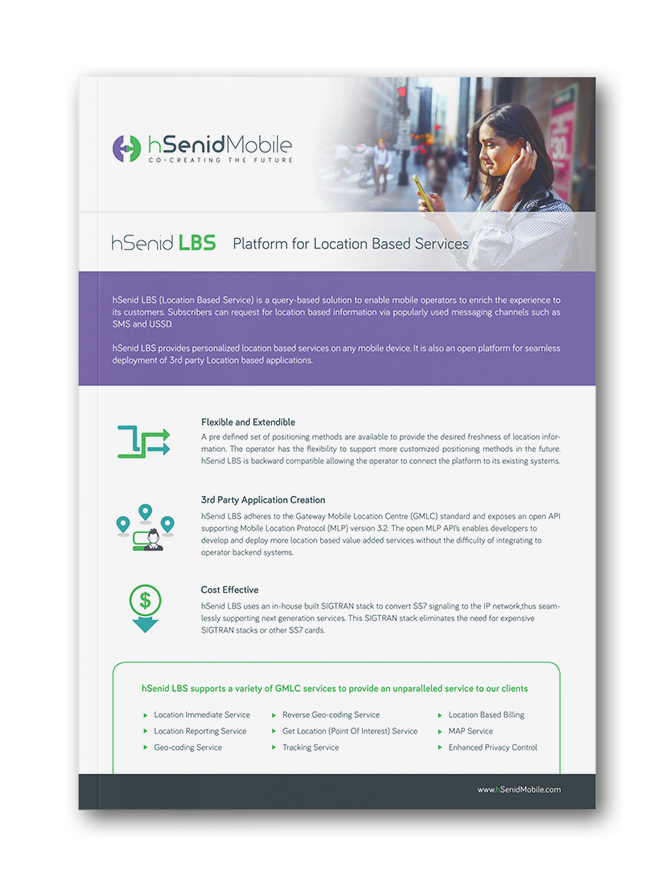
hSenid LBS is designed as a query-based solution that enables mobile operators to provide personalized location-based information across mobile devices. The platform also supports third-party location-based applications, helping operators open their network capabilities to a wider ecosystem.
This allows a telco to create a Location-based services platform that can serve enterprises, developers, advertisers, and digital service providers through a controlled environment.
Instead of building custom integrations for every new use case, the operator can establish a common service layer and reuse it across multiple products. That creates a stronger foundation for monetization.
Creating Enterprise Location Services
Enterprise customers are a major opportunity for telcos exploring new digital revenue streams.
Businesses increasingly want to make their communications, services, and campaigns more relevant to where customers are located. Retailers may want to target customers around a specific store. Transport providers may need nearby destination information. Service companies may use location insights to support field teams or regional operations.
Enterprise location services give operators a way to package these capabilities for business customers.
Commercial models can include subscriptions, API-based charging, transaction fees, managed services, or bundled enterprise solutions. Instead of selling connectivity alone, the telco can provide a higher-value digital capability built on its existing network infrastructure.
A capable LBS Service Provider can help operators deliver these services while supporting different positioning methods and future expansion.
Enabling Developers Through Location APIs
Developers are another important part of the revenue opportunity.
Building directly against telecom network infrastructure can be difficult. Developers often need simpler interfaces that allow them to access location functions without managing complex backend integrations.
A Location API gateway can solve this problem by creating a controlled layer between external applications and operator systems.
The hSenid LBS architecture supports third-party applications through an MLP interface and includes positioning mechanisms such as ATI, PSI, SIGTRAN, and customized positioning methods. The platform also includes administration and charging gateway components.
This can help operators build an ecosystem where developers create new location-aware services while the telco controls access and monetization.
Applications could include nearby destination discovery, local services, mobility solutions, regional notifications, or customer engagement tools.
For operators, this opens the possibility of charging for API access, usage volumes, or commercial partnerships.
Creating Revenue Through Location-Based Advertising
Location can also make mobile advertising more contextual.
Traditional mass campaigns often reach customers regardless of whether the message is relevant to their current surroundings. Telco location intelligence enables a more targeted approach by helping businesses engage users within a selected geographic area.
The hSenid LBS material illustrates a mobile advertising use case where users within a defined boundary can be identified and targeted with promotional alerts.
For example, a restaurant could send an offer to customers nearby. A retailer could promote a limited-time campaign to people around a shopping area. An event organizer could reach subscribers close to a venue.
The operator provides the location capability, while the enterprise manages the commercial message.
This creates opportunities for campaign-based pricing, enterprise subscriptions, location-query charges, or broader managed engagement services.
Supporting Useful Consumer Location Services
Revenue generation does not always need to begin with advertising.
Useful services can encourage adoption and create the foundation for future monetization.
The hSenid LBS material shows an example where a user can search for the nearest coffee shop and receive destination information. It also highlights services such as reverse geocoding, location reporting, point-of-interest services, tracking, mapping, location-based billing, and enhanced privacy controls.
These capabilities can support experiences around nearby restaurants, ATMs, taxi services, tourism locations, retail outlets, and other points of interest.
A single platform can therefore support both consumer services and enterprise use cases.
Building a Broader Location Ecosystem
The biggest opportunity may not come from a single application. It comes from enabling many applications through the same platform.
When location capabilities are accessible through standardized interfaces, operators can collaborate with developers and enterprises rather than building every service themselves.
That makes it easier to introduce new use cases and allows external partners to innovate on top of telecom infrastructure.
This also changes the operator’s role in the digital ecosystem. The telco moves beyond being only a connectivity provider and becomes a provider of trusted network capabilities.
Working with an experienced LBS Service Provider can help operators create this ecosystem while maintaining compatibility with existing network systems.
Making Existing Network Assets Work Harder
Telcos already invest heavily in infrastructure. The challenge is finding more ways to create value from those investments.
Location-based capabilities provide one such opportunity.
Instead of treating network location as an internal technical function, operators can expose it as a service that supports enterprise applications, advertising, developers, and consumer experiences.
This approach can help telcos diversify revenue while using infrastructure and intelligence they already possess.
It also creates more opportunities for partnerships. Enterprises gain access to valuable location capabilities, developers gain simpler integration options, and operators create new services around their networks.
Turning Location into a Long-Term Revenue Opportunity
Location services can become an important part of a telco’s digital growth strategy.
With the right platform, operators can develop enterprise offerings, expose APIs, support targeted campaigns, enable third-party applications, and deliver useful location-aware services.
The real value is not simply knowing where a subscriber is. It comes from turning secure, controlled location capabilities into services that businesses and developers can use.
For telcos exploring new ways to grow beyond traditional connectivity, a flexible LBS Service Provider can help transform location intelligence into a scalable source of digital value.