Timing matters in marketing. So does location. A message sent five minutes too early can be ignored. The same message delivered when a customer is close to a store, restaurant, branch, or service point can feel instantly relevant. For telecom operators, this creates a powerful commercial opportunity. With the right LBS Service Provider, network location intelligence can help enterprises reach customers at moments when their surroundings make action more likely.
Why Location Changes the Value of a Marketing Message
Most marketing campaigns are built around audience profiles. Age, interests, past purchases, and digital behavior all matter. But those signals still leave one important question unanswered: where is the customer right now?
Location adds immediate context.
A customer who receives a restaurant offer while sitting at home may ignore it. The same customer receiving that offer while walking through a nearby shopping district may respond very differently.
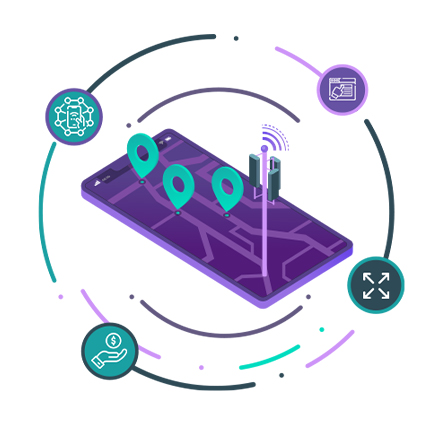
This is where a Location-based services platform becomes valuable. It allows operators to turn network location capabilities into services that enterprises can use for more contextual communication.
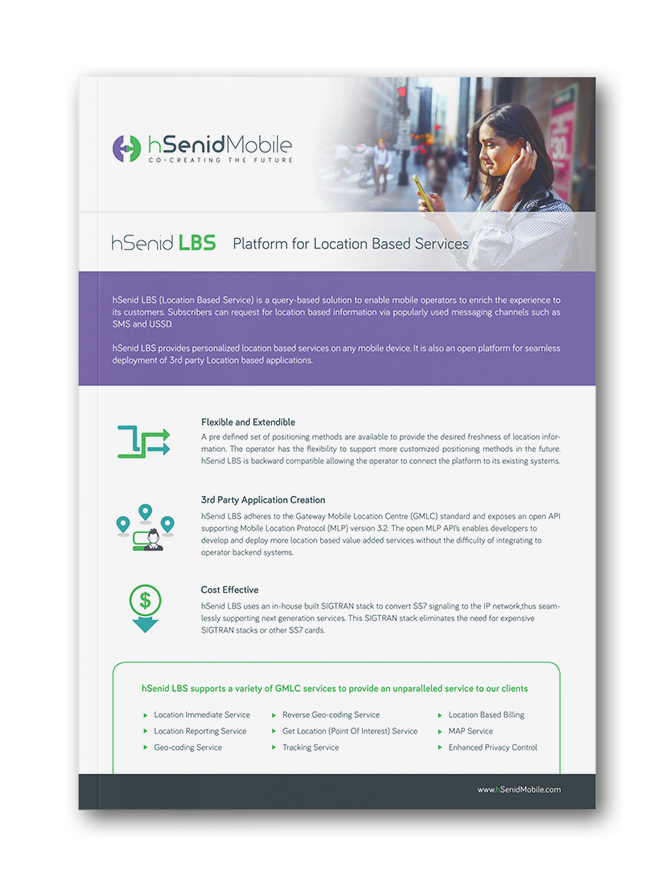
hSenid LBS is designed as a query-based solution that enables mobile operators to provide personalized location-based information. It also supports third-party location applications, giving operators a foundation for building broader digital services around location.
The Commercial Value of the Right Place and the Right Moment
Location-aware engagement is not simply about knowing where a subscriber is.
The value comes from connecting that location to a useful business action.
A quick-service restaurant could promote an offer to customers near one of its outlets. A retailer could send a campaign to shoppers close to a store. A transport provider could promote a relevant service based on a subscriber’s area. Entertainment venues could communicate with people nearby before an event begins.
These examples all rely on one idea: relevance increases when the message matches the customer’s immediate environment.
For telcos, this opens the door to Enterprise location services that can be sold to brands and business customers as part of broader engagement solutions.
From Mass Messaging to Location-Aware Engagement
Traditional bulk campaigns treat thousands of customers in the same way. Location intelligence creates a more selective model.
The hSenid LBS material illustrates a mobile advertising use case where customers within a particular geographic boundary can be identified and targeted with promotional alerts.
That changes the role of the operator.
Instead of simply delivering an SMS or notification, the telco can provide Telco location intelligence that helps determine when a campaign should reach a specific audience.
For the enterprise, the benefit is stronger context.
For the operator, the benefit is a new service that can sit above basic connectivity.
Why the Five-Minute Window Matters
In many purchasing situations, intent is temporary.
Someone walking past a café may only be nearby for a few minutes. A customer entering a shopping district may be deciding where to buy. A traveler arriving near a transport hub may suddenly need a taxi, a meal, or another nearby service.
That short window can be commercially important.
Location-aware communication allows brands to respond to the customer’s current situation rather than relying only on past behavior.
This does not mean every nearby customer should receive a promotion. Relevance, consent, privacy, frequency, and campaign quality still matter. But when those elements are managed correctly, location creates a stronger trigger for timely engagement.
An LBS Service Provider can give operators the technical foundation to expose those location capabilities in a controlled way.
Location APIs Can Make the Model Scalable
A single marketing campaign is useful. A reusable platform is more valuable.
Operators need a way to support multiple enterprises and third-party applications without creating separate backend integrations for every customer.
A Location API gateway can provide that layer.
The hSenid LBS architecture includes an MLP interface for third-party applications and supports positioning mechanisms including ATI, PSI, SIGTRAN, and customized positioning methods. The platform also includes administration and charging gateway components.
This creates a practical foundation for commercial services.
Retail applications, food delivery platforms, mobility services, tourism solutions, and enterprise marketing systems could all consume location capabilities through standardized interfaces.
The telco can then build pricing around API usage, campaigns, subscriptions, or enterprise packages.
Useful Services Can Create Buying Moments Too
Location does not have to be used only for promotions.
Sometimes the most effective way to influence a buying decision is to help the customer solve an immediate need.
The hSenid LBS material includes a use case where a subscriber can request the nearest coffee shop and receive destination information.
That simple example shows how location can connect a customer with a nearby business at exactly the moment the service is needed.
The platform also supports functions such as reverse geocoding, point-of-interest services, tracking, mapping, location reporting, location-based billing, and enhanced privacy controls.
These capabilities can support a wide range of customer journeys.
A shopper may search for the nearest branch. A traveler may look for transport. A visitor may need nearby attractions. In each case, location turns a general service into something immediately useful.
New Revenue for Telcos Goes Beyond Advertising
Location-aware advertising is only one business model.
Once a telco has a strong Location-based services platform, it can explore several forms of monetization.
Enterprises may pay for location queries or access to location APIs. Developers may consume capabilities through commercial API packages. Brands may purchase managed location-based campaigns. Businesses may subscribe to enterprise applications built around workforce or customer location.
The important shift is that network location becomes a reusable digital asset.
Instead of earning only from the connectivity used to deliver a message, the operator can earn from the intelligence that makes that message more relevant.
That is a much stronger position in the digital value chain.
Build Around Relevance, Not Just Reach
Telecom networks offer enormous reach. But reach by itself does not guarantee engagement.
Location adds context.
When operators combine location intelligence with enterprise communication services, APIs, and application ecosystems, they can help businesses interact with customers in more meaningful ways.
The goal is not simply to send more messages.
It is to make fewer messages matter more.
For operators, choosing a flexible LBS Service Provider can make that possible by connecting network positioning capabilities with applications, enterprises, and commercial services.
The five-minute opportunity may be brief, but the business potential behind it is much bigger.