
Telcos already have more data than most enterprises could ever use.
Subscriber records.
Service requests.
Network documentation.
Internal policies.
Billing information.
Operational reports.
The problem is not access to data.
It is how much manual work still sits between that data and a useful action.
AI can remove a large part of that work. But telcos cannot treat subscriber data like ordinary prompt input.
That is where sovereign AI for telecom becomes useful.
The goal is simple: automate back-office work while keeping sensitive data inside the boundaries the organisation controls.
Why Telco AI Needs Different Rules
A general AI assistant can summarise text or answer questions.
A telco AI workflow may need to interact with customer records, internal systems, policy documents and operational APIs.
That changes the risk.
The moment an LLM is connected to subscriber information, the questions become:
Where is this data processed?
Does it leave the country?
Which model can see it?
Can the model access the entire customer record?
Who can use the workflow?
What happens when the AI is uncertain?
Can every action be traced?
These are architecture questions, not prompt-engineering questions.
Start With Back-Office Work, Not a Chatbot
The strongest enterprise AI opportunities are often behind the customer-facing channels.
Look at the repetitive work employees handle every day.
Reading documents.
Checking policies.
Searching internal knowledge.
Classifying requests.
Extracting fields.
Preparing reports.
Routing cases.
Comparing information across systems.
These tasks consume time without always requiring senior-level judgment.
That is where AI can create a measurable operational difference.
Across the Sovereign AI use cases we track, knowledge-search and policy-lookup automation for 500-person knowledge-worker teams has recovered more than 40,000 staff hours annually.
Document intelligence deployments across banking, logistics and HR workflows have reduced processing time by 80%.
The industries differ.
The pattern is the same: valuable people spend too much time finding, reading and moving information.
Keep Subscriber Data Inside the Right Boundary
A telco should not have to send every piece of subscriber information to an external LLM to make AI useful.
With Sovereign AI, sensitive workloads can run on-premise or inside a private-cloud environment.
For workflows that can use external models, personally identifiable information can be masked before the request leaves the controlled environment.
A prompt containing a subscriber name, number or account identifier can be transformed before it reaches the model.
The LLM receives the context required to complete the task.
It does not automatically receive the subscriber’s real identity.
This creates a practical middle ground between blocking external AI completely and sending raw enterprise data into it.
Route Different Workloads to Different Models
Not every telco workflow needs the same LLM.
A basic classification task may only need a fast, lower-cost model.
A complex analysis may need a stronger reasoning model.
A workflow involving sensitive subscriber information may need to remain on a local LLM.
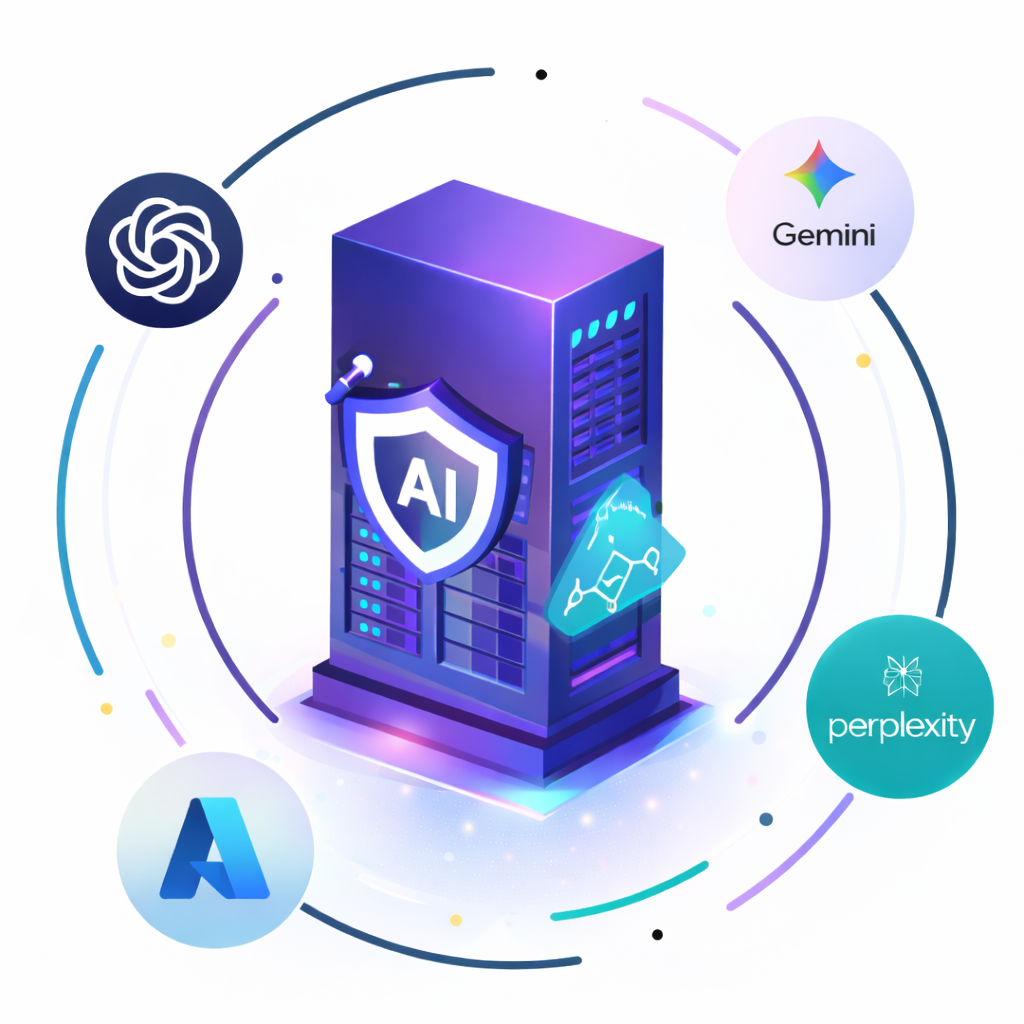
Sovereign AI can route tasks to OpenAI, Gemini, Claude, Llama, DeepSeek or local models depending on cost, speed and policy.
That matters in telecom because scale changes the economics quickly.
A small difference in cost per request becomes significant when the workflow runs thousands or millions of times.
The most powerful model should not become the default model simply because it is available.
Give AI Access to the Workflow, Not the Whole Network
AI automation works when the system has the right context.
That does not mean unrestricted access.
A knowledge assistant may need access to internal documentation.
A service workflow may need selected CRM information.
An operational process may need to call an approved API.
Each AI workflow should receive only the access required to complete its job.
Sovereign AI applies role-based controls around these integrations and maintains audit logs across AI interactions.
That creates a clear boundary around what the AI can read, what it can do and what needs human approval.
What Could Telcos Automate?
The best starting points are usually high-volume workflows with clear rules and measurable turnaround times.
Examples include:
internal knowledge and policy search
document extraction and classification
employee support requests
service-request routing
operational report summarisation
information retrieval across internal systems
repetitive back-office checks
first-pass review before human escalation
The aim is not to remove people from every decision.
It is to remove the work that does not need their judgment.
Let AI read, retrieve, compare and route.
Keep people where exceptions, accountability and judgment matter.
Audit Logs Matter When AI Starts Taking Action
An AI-generated answer can be reviewed and ignored.
An AI action is different.
If a workflow reads subscriber data, calls an internal system, routes a case or triggers another process, there needs to be a record.
Who initiated it?
Which model handled it?
What information did it use?
Was sensitive data masked?
Which system was accessed?
What happened next?
Sovereign AI includes audit logging as part of the control layer alongside PII masking, role-based access and team-level budget controls.
That visibility becomes critical as AI moves deeper into operations.
Our Starting Point Is the Workflow
At hSenid Mobile, Forward Deployed Engineers begin with the operating process rather than the model.
They map where the work happens, identify the bottleneck, determine what data AI needs and define where the security boundary should sit.
Then they connect the required systems and models around that workflow.
The engagement is structured around moving from workflow mapping to measurable production results within 90 days under a fixed scope.
That keeps the project focused on an operational outcome rather than an AI demonstration.
Sovereign AI Is About Control, Not Isolation
Keeping control of telco data does not mean isolating the organisation from the wider AI ecosystem.
It means deciding which workload can use which model, what data it can see and where that processing happens.
Some work can use external LLMs after masking.
Some should stay in a private environment.
Some should require human approval.
The architecture should enforce those decisions automatically.
Telcos already have the data.
The opportunity is to put that data to work without giving up control of it.
That is where sovereign AI becomes more than an infrastructure decision.
It becomes an operating model for enterprise AI.
Talk to a Sovereign AI Consultant
Learn how Sovereign AI and Forward Deployed Engineers can connect AI securely to the work that actually matters.