Artificial intelligence has changed the cybersecurity landscape in a major way. While defenders are using AI to improve detection and response, attackers are also adopting AI to make their campaigns faster, smarter, and harder to spot. What was once limited by time, effort, and skill is now becoming more scalable and efficient.
Introduction
Cyberattacks are no longer built only by highly skilled operators working manually. With AI, threat actors can automate parts of reconnaissance, phishing, malware development, social engineering, and evasion. This makes attacks more frequent, more personalized, and in some cases much harder to detect.
For security teams, this is not a future concern. AI-powered attacks are already changing how incidents unfold. The biggest risk is not that AI creates completely new attack types, but that it makes existing ones more effective. That means organizations must rethink how they prepare, detect, and respond.
This article explains how AI is being used in cyberattacks, why it matters, and what teams should do to stay ready.
What Are AI-Powered Cyber Attacks?
AI-powered cyber attacks are attacks where artificial intelligence is used to improve one or more stages of the attack lifecycle. This can include gathering information about targets, generating convincing messages, adapting malware behavior, or helping attackers avoid detection.
These attacks may not always be fully automated from start to finish. In many cases, AI is used as an assistant that speeds up human attackers. Even so, the result is the same: more efficient and more dangerous operations.
The main concern is that AI lowers the barrier to entry. Attackers with limited skill can still produce convincing phishing content, analyze large amounts of public information, or script repeated attack attempts. That increases the volume and quality of threats facing organizations.
How Attackers Use AI
1. Phishing and social engineering
One of the most common uses of AI in cybercrime is phishing. AI can generate polished emails, text messages, or chat messages that sound natural and persuasive. It can also personalize content based on public details about a target, such as job title, company, or recent activity.
This makes phishing harder to identify because the messages are often free of the obvious grammar mistakes and awkward phrasing that used to reveal scams. AI can also help attackers run large-scale campaigns with different versions of the same message, making them harder to block.
2. Reconnaissance and profiling
Before launching an attack, adversaries need information. AI can help scan public websites, social media, leaked data, code repositories, and other open sources to build detailed profiles of people, systems, and organizations.
Instead of manually collecting and organizing this information, attackers can use AI to summarize it, identify likely targets, and suggest the most effective next step. This speeds up the planning phase and improves attack precision.
3. Malware development support
AI can assist in writing or modifying malicious code. It may help generate scripts, rewrite payloads, or produce alternate versions of malware to avoid simple detection rules.
While AI does not automatically create advanced malware on its own, it can reduce the effort needed to build, test, and adapt malicious tools. That is enough to give attackers a meaningful advantage.
4. Evasion and adaptation
Security tools look for patterns. AI can help attackers observe those patterns and adjust behavior accordingly. For example, an attack may change timing, wording, file structure, or delivery methods to avoid detection.
This kind of adaptation is especially dangerous because it makes attacks more dynamic. A static defense that works once may fail the next time the attacker changes approach.
5. Password attacks and credential abuse
AI can also support credential attacks by helping attackers generate realistic login attempts, automate account testing, or refine stolen credential campaigns. When combined with leaked data, this can increase the success rate of account compromise attempts.
If organizations do not use strong authentication controls, such attacks become much more dangerous.
Why This Threat Matters
AI-powered attacks matter because they increase both scale and quality. Attackers can do more in less time, and they can do it with fewer resources. This means organizations may face more attacks than before, and some of those attacks may be better targeted.
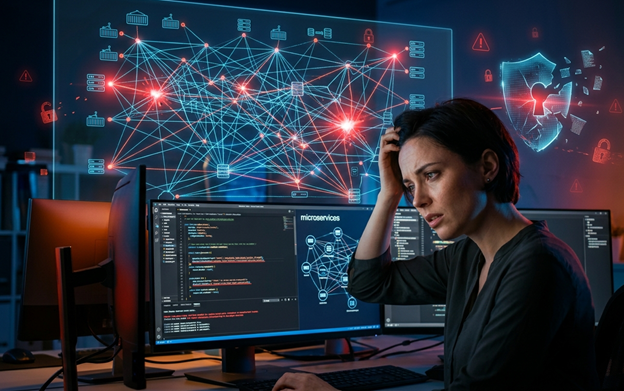
This also creates pressure on security teams. Analysts already deal with large alert volumes, limited staffing, and fast-moving threats. AI-driven attacks can make that burden worse by increasing the number of believable phishing attempts, suspicious login events, and malicious campaigns.
Another problem is speed. AI can help attackers test ideas, change tactics, and iterate quickly. That shortens the time defenders have to notice and respond.
Common Weaknesses Attackers Exploit
AI-powered attacks often succeed because organizations still rely on weak fundamentals. If email security is poor, phishing campaigns become more effective. If MFA is weak or inconsistent, credential attacks become more dangerous.
Attackers also benefit from poor user awareness. A realistic message from an AI-generated phishing campaign may fool employees who are trained only to spot obvious scams. This is why awareness programs need to evolve along with the threat.
Weak logging and slow incident response also help attackers. If suspicious activity is not detected early, an AI-assisted campaign can move from initial access to lateral movement very quickly.
How Teams Can Respond
The best defense against AI-powered attacks is not another layer of buzzwords. It is strong security fundamentals supported by smarter monitoring and response.
Teams should start by strengthening identity security. Multi-factor authentication, conditional access, least privilege, and strong password policies remain essential. Many AI-driven attacks still depend on compromising credentials or tricking users into giving them away.
Email filtering and phishing protection should also be improved. Security teams should look for behavioral indicators, not just known malicious strings. Because AI-generated messages can be highly polished, content-based detection alone is no longer enough.
User training must be realistic. Employees should learn how modern phishing works, including personalized messages, urgent requests, and fake internal communication. Training should focus on behavior and verification, not just spotting spelling mistakes.
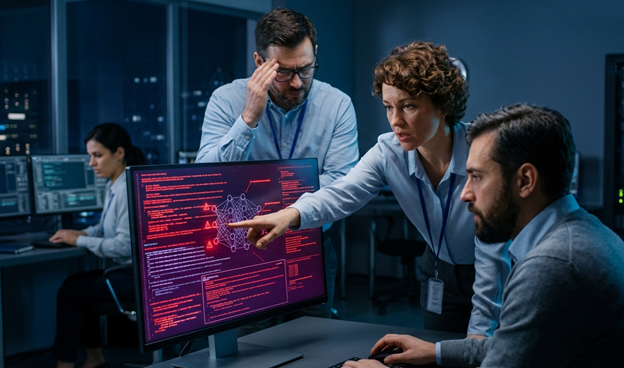
Security monitoring should be tuned to detect unusual patterns, such as impossible travel, repeated failed logins, suspicious API calls, or abnormal file access. These signals may reveal AI-assisted attacks early.
Incident response plans should also assume faster attacker movement. The goal is to detect, contain, and investigate before the attacker can expand access. Speed is now a core part of defense.
The Role of AI in Defense
AI is not only a threat; it is also part of the solution. Security teams can use AI to sort alerts, detect anomalies, summarize incidents, and assist with triage. In environments with limited staff, this can make a real difference.
The important point is to use AI carefully. Defensive AI should support analysts, not replace judgment. Human review is still necessary for high-impact decisions.
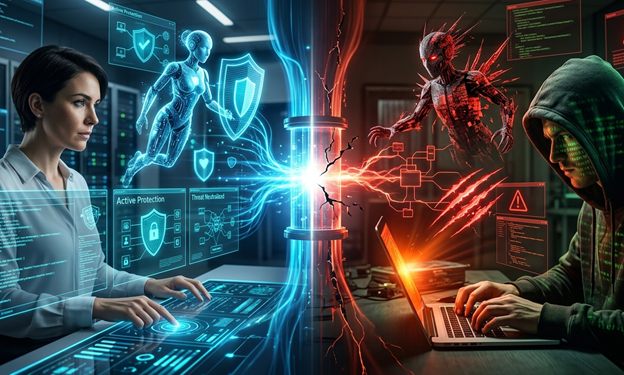
Teams should also be aware that attackers and defenders are now in the same race. The side that adapts faster will usually have the advantage.
What Security Leaders Should Do
Security leaders should treat AI-powered attacks as a planning issue, not just a technical issue. The organization needs awareness, process, and technology working together.
They should review identity controls, phishing defenses, logging coverage, and incident response readiness. They should also ensure that employees know how to report suspicious activity quickly.
It is also useful to test the organization through simulations. Phishing exercises, login abuse scenarios, and response drills can show where weaknesses still exist. These exercises should reflect the reality of AI-generated attacks, not outdated examples.
Conclusion
AI-powered cyber attacks are changing the way attackers operate. They are faster, more scalable, and more convincing than many traditional attacks. That makes them a serious threat for every organization, regardless of size or industry.
The good news is that the fundamentals still matter. Strong identity protection, user awareness, monitoring, and incident response remain the most effective defenses. The challenge is to apply them with the understanding that attackers are now using AI too.
Security teams that prepare early will be better positioned to detect these threats, respond quickly, and reduce their impact.
Visit hSenid Mobile website to discover more insights, stories, and updates