
There’s a quiet problem happening inside a lot of companies right now.
People are using AI. A lot. But no one really knows how, where, or why.
One team is generating marketing copy with ChatGPT. Another is summarizing legal documents using a random browser plugin. Someone in finance is testing an AI agent they saw on Reddit. And IT? They’re trying to catch up after the fact.
It looks like innovation on the surface. But dig a little deeper and it’s mostly scattered experimentation without direction.
The real question is not whether your organization is using GenAI. It’s whether that usage is actually moving the business forward or just creating hidden risks.
The uncomfortable reality of enterprise AI adoption
Let’s start with a number.
A 2024 study by Microsoft and LinkedIn found that 75% of knowledge workers are already using AI tools at work, and nearly 78% of them bring their own tools without company approval.
That means most organizations already have shadow AI usage happening right now. No governance. No visibility. No control.
If you’ve ever wondered:
- how do I know if my staff are using AI tools
- AI tools employees using without IT approval
- ChatGPT data privacy risk employees
You’re not alone. These are becoming common concerns across enterprises.
And the risk is not theoretical.
Employees using ChatGPT with company data has already led to real incidents. Samsung famously had engineers leak sensitive code into ChatGPT. That wasn’t a hack. It was just someone trying to get work done faster.
This is where things start to break.
Because GenAI without structure doesn’t scale. It leaks. It wastes money. It creates inconsistencies.
Experimentation feels productive. But it rarely is
There’s nothing wrong with experimenting. In fact, it’s necessary.
But here’s what usually happens when experimentation becomes the default mode:
- Teams pick different tools with no alignment
- Costs spiral because no one tracks token usage
- Data gets exposed through unsecured prompts
- Use cases never move beyond proof-of-concept
You end up with 20 small AI experiments and zero measurable impact.
According to McKinsey, only about 15% of companies that experiment with AI actually manage to scale it successfully. That gap is huge.
Why?
Because scaling AI is not about tools. It’s about structure.
Where GenAI Gateway changes the game
This is where the idea of a GenAI Gateway starts to make sense.
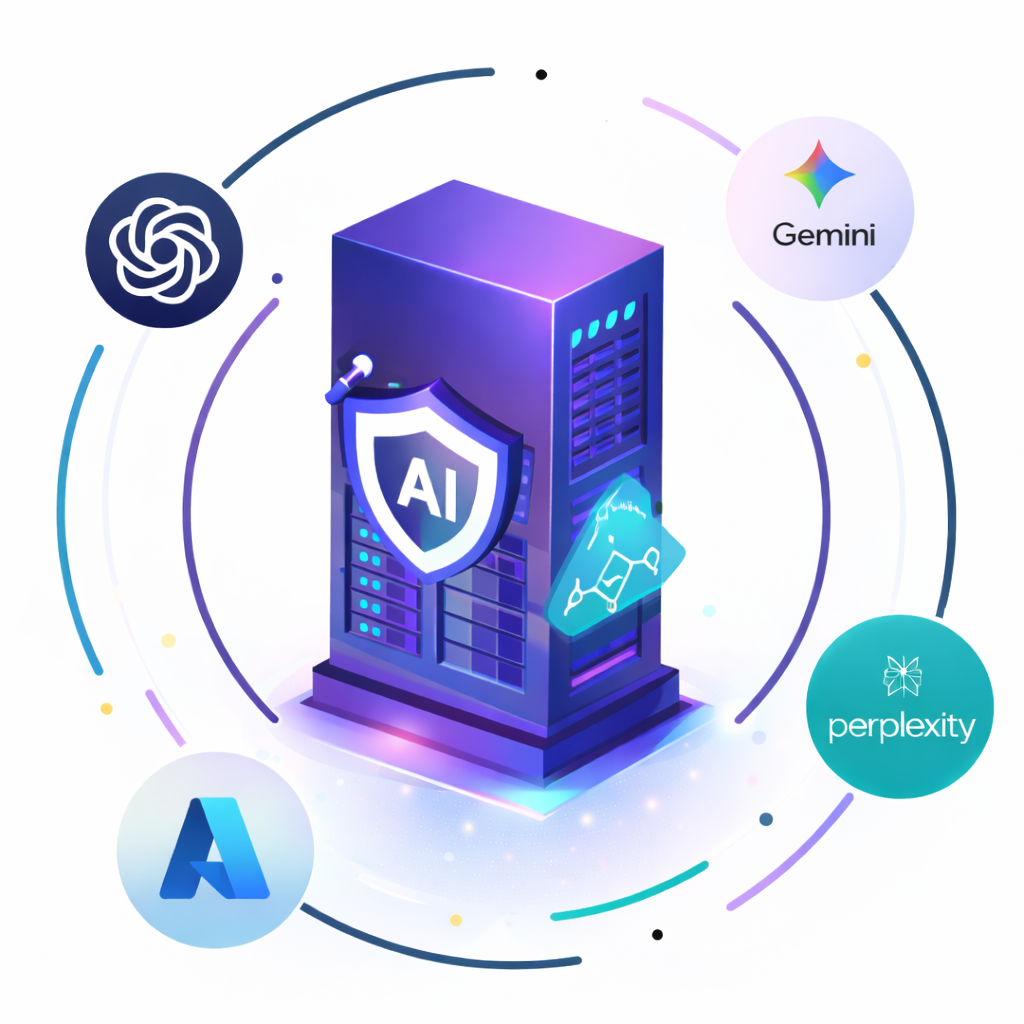
Instead of letting every employee directly access AI tools, you route everything through a centralized layer. Think of it like an intelligent control point for all AI interactions.
It sounds simple. But the impact is massive.
A GenAI Gateway allows you to:
- Control which models are used and when
- Route sensitive workloads to private or on-prem models
- Apply data masking before anything leaves your environment
- Track usage across teams and departments
- Set budgets and prevent cost overruns
This isn’t just theory. It’s exactly how modern enterprise AI platforms are being designed.
The Sovereign AI approach explains this clearly. Instead of blocking AI tools completely or letting chaos continue, enterprises create a centralized AI access platform where all requests are routed and governed .
That shift changes everything.
The hidden cost problem no one talks about
Let’s talk about money for a second.
Most AI tools charge based on tokens. More usage means higher cost. Sounds straightforward.
But in an enterprise setup, things get messy fast.
Different teams use AI differently. Legal teams process long documents. Marketing teams generate short content. HR might screen resumes.
Without centralized tracking, you don’t know:
- who is using what
- how much they’re spending
- whether that spend is justified
And shared API keys make it worse. There’s no accountability.
A proper GenAI Gateway solves this by introducing centralized key management, usage monitoring and budget controls, so enterprises can actually scale AI without losing financial control .
This is where many companies fail quietly. Not because AI doesn’t work, but because they can’t manage the cost of using it.
Multi-model chaos vs multi-model strategy
Another thing most teams don’t realize early enough.
Not all AI models are good at everything.
Some are better at coding. Others at writing. Some are safer for sensitive data. Others are cheaper for high-volume tasks.
Yet many organizations lock themselves into a single model because it’s easier.
That’s a mistake.
A smarter approach is multi-model AI management, where different use cases are routed to different models based on need.
The Sovereign AI architecture actually highlights this. Enterprises should be able to route requests to:
- on-prem models for sensitive data
- privacy-enhanced cloud environments
- external APIs when needed
This flexibility is what separates experimentation from real AI strategy.
And again, this only works if you have something like a GenAI Gateway in place.
Security is not just an IT problem anymore
Here’s the part most leadership teams underestimate.
AI risk is no longer just about systems. It’s about people.
Someone installs an agentic AI tool that can browse files. Someone pastes confidential data into a prompt. Someone connects an external plugin.
None of this requires malicious intent.
It just requires curiosity.
That’s why enterprises are now looking at:
- how to stop shadow AI in enterprise
- centralized AI access control enterprise
- AI usage monitoring employees
Because traditional security models don’t cover this new layer of behavior.
A controlled AI environment needs:
- policy enforcement before data leaves
- redaction and masking of sensitive inputs
- sandboxed environments for risky AI applications
Without these, innovation becomes exposure.
From chaos to controlled innovation
So what does a mature GenAI setup actually look like?
It’s not about limiting usage. It’s about enabling it safely.
Here’s a simple way to think about it:
Stage 1: Uncontrolled experimentation
Everyone uses whatever tools they want. No visibility.
Stage 2: Awareness and policy
Organizations start asking questions. They introduce guidelines and governance.
Stage 3: Platform-driven AI adoption
Everything runs through a centralized system with monitoring, control and optimization.
Most companies are stuck between Stage 1 and Stage 2 right now.
Very few have reached Stage 3.
And that’s where the real value is.
Where infrastructure actually matters
This is the part many overlook.
AI strategy is not just about models. It’s also about infrastructure.
If you’re serious about scaling GenAI, you need the right foundation:
- enterprise Kubernetes platform consulting for scalable deployments
- OpenShift managed services to run AI workloads efficiently
- RHEL support services for stability and security
- Ansible automation consulting to automate operations
These are not just backend choices. They directly impact how fast and safely you can deploy AI at scale.
A reliable OpenShift migration partner or the best OpenShift consulting company can help organizations move from fragmented experiments to production-ready AI environments.
And yes, OpenShift cost optimization becomes critical when AI workloads start growing.
Because without the right setup, even the best AI strategy will struggle to deliver consistent results.
So… are you really using GenAI?
Or are you just experimenting without direction?
It’s an uncomfortable question, but an important one.
If your organization has:
- no visibility into AI usage
- no control over data flow
- no structured deployment strategy
- no cost tracking
Then you’re not really using GenAI yet.
You’re just testing it.
The shift happens when you move from tools to systems. From access to governance. From curiosity to strategy.
That’s where something like a GenAI Gateway becomes less of a technical concept and more of a business necessity.
Ready to Move Beyond AI Experimentation?
If GenAI is already being used across your teams but without visibility, control, or clear direction, it’s time to fix that before it turns into a bigger risk.
A GenAI Gateway gives you the structure to scale AI properly. You get centralized access, better cost control, stronger data protection, and the flexibility to use the right model for every task without locking yourself in.
If you’re exploring how to govern AI usage across departments or looking for a more secure, enterprise-ready approach to adoption, now is the time to act.