Digital advertising platforms have built their strength around data, targeting, and measurable customer engagement. Telcos may not compete with them in exactly the same way, but they have something those platforms do not always control directly: network-level location intelligence. With the right LBS Service Provider, operators can turn this capability into a stronger enterprise offering and create new opportunities in location-aware marketing, customer engagement, and digital services.
Telcos Already Own a Valuable Context Signal
Telecom operators know more than whether a subscriber is connected.
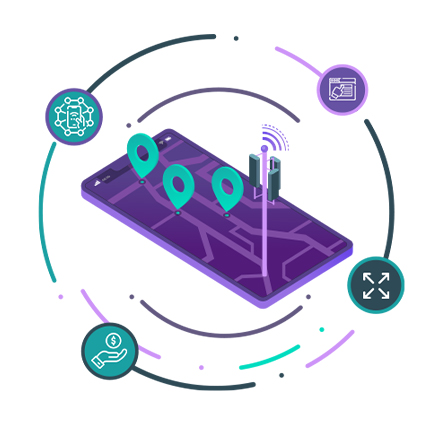
Their networks can support location-based information that helps identify where a user is in relation to a particular area, service point, or point of interest. That creates an important layer of context for enterprises.
A digital advertising platform may know what a person searched for, clicked, or viewed. A telco can potentially support engagement based on where that person is located at a given moment.
That difference matters.
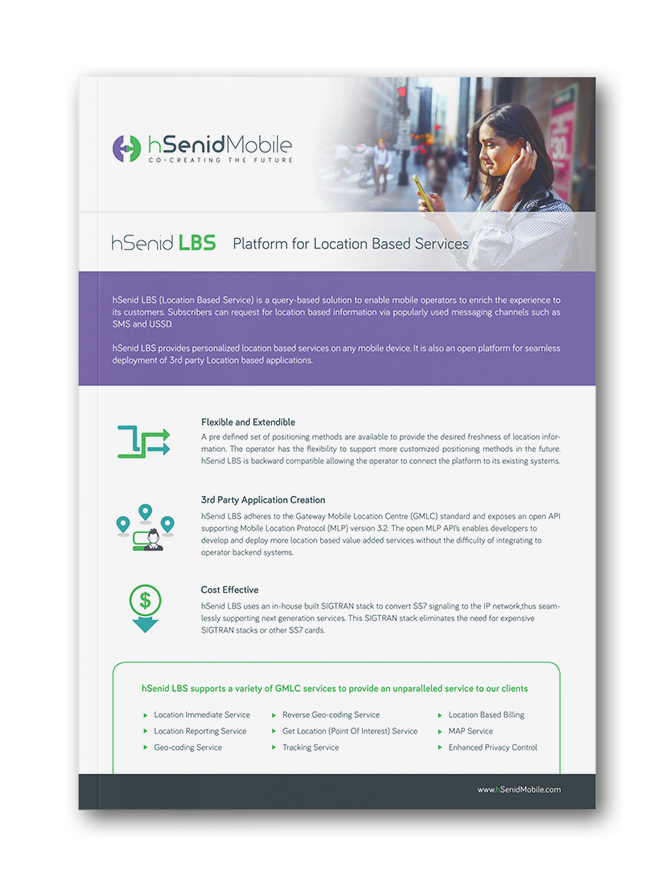
hSenid LBS is designed as a query-based solution that allows mobile operators to provide personalized location-based information. It also supports third-party location applications, helping telcos create services beyond basic connectivity.
This gives operators a foundation for building a Location-based services platform that can serve advertisers, enterprises, application developers, and digital service providers.
Location Can Make Advertising More Contextual
One of the biggest challenges in digital advertising is relevance.
A customer may fit the right demographic profile but still receive a message at the wrong time or in the wrong place. Location adds another layer to targeting.
Consider a customer moving through a shopping district. A retailer nearby may have a limited-time offer. A restaurant may want to reach people within a short distance during lunch. An entertainment venue may want to communicate with people entering the surrounding area.
In each case, Telco location intelligence can help create a more context-aware campaign.
The hSenid LBS material illustrates a mobile advertising scenario where people within a selected geographic boundary can receive promotional alerts.
This shows how location can move marketing away from broad messaging and toward more relevant engagement.
Competing Does Not Mean Copying Digital Ad Platforms
Telcos do not need to recreate the entire digital advertising ecosystem.
Their advantage comes from using what is already unique to the telecom network.
Location-based capabilities can support services that digital platforms may not be positioned to offer in the same way. The operator can combine network intelligence with messaging, enterprise platforms, APIs, and billing capabilities.
This creates a different type of advertising proposition.
Instead of selling only audience impressions, the telco can offer enterprises the ability to engage customers based on geographic context.
A capable LBS Service Provider can help operators package those capabilities into services that businesses can access more easily.
Enterprise Location Services Can Go Beyond Advertising
Advertising may be one of the most visible use cases, but it is not the only one.
Enterprise location services can support customer engagement, workforce applications, logistics, nearby-service discovery, transportation, and other location-aware experiences.
This matters because a telco does not need to build its business case around advertising alone.
The same location infrastructure can support multiple revenue-generating services.
For example, a retailer could use location information for local customer engagement. A transport company could support nearby service discovery. A business could use location functions within its own enterprise applications.
This makes the investment in an LBS platform more strategic.
Instead of supporting one campaign type, the operator is building a reusable digital capability.
APIs Can Help Telcos Reach More Businesses
One reason digital platforms scale so effectively is that they make their capabilities easy for businesses and developers to consume.
Telcos can apply the same principle to location.
A Location API gateway can make network location functions available through standardized interfaces, reducing the need for every enterprise to understand telecom infrastructure.
The hSenid LBS architecture includes an MLP interface for third-party applications. It also supports ATI, PSI, SIGTRAN, and customized positioning methods, together with administration and charging gateway components.
This gives operators a way to connect external applications with network positioning capabilities while maintaining a structured service layer.
For developers, that means simpler integration.
For telcos, it means more opportunities to monetize location through API usage, enterprise packages, or commercial partnerships.
Location Can Support High-Intent Customer Moments
A strong advertising proposition depends on more than audience size.
It depends on relevance.
Location can help enterprises identify situations where a customer may be closer to taking action.
For example, someone searching for the nearest coffee shop is already expressing an immediate need. The hSenid LBS material includes a use case where a subscriber requests the nearest coffee shop and receives destination information.
That type of service connects location with intent.
The same principle can apply to nearby retail stores, restaurants, transport services, entertainment venues, ATMs, tourism destinations, and other points of interest.
This is where location becomes commercially interesting.
It is not simply about knowing where a customer is. It is about creating a useful interaction based on that location.
Telcos Can Build Their Own Location Ecosystem
Digital advertising platforms became powerful partly because they created ecosystems around advertisers, developers, businesses, and users.
Telcos can build a similar ecosystem around network capabilities.
A Location-based services platform can allow multiple applications and enterprise services to use the same underlying location infrastructure.
This means the operator does not have to develop every solution internally.
Third-party developers can build applications. Enterprises can integrate location capabilities into their own systems. Marketing teams can use location for customer engagement.
The operator provides the controlled network capability that connects these services.
An LBS Service Provider can help establish the platform layer required to support this model.
The Revenue Opportunity Is Broader Than Campaign Fees
Location-based advertising can create direct commercial opportunities, but the revenue potential extends further.
Operators can consider models such as enterprise subscriptions, API consumption, transaction-based charging, managed services, developer partnerships, or bundled digital solutions.
The hSenid LBS architecture includes charging gateway functionality, which highlights the importance of monetization as part of the platform design.
This is an important distinction.
If location is treated only as a technical network function, its commercial potential remains limited.
If it is packaged as a service, it becomes part of the operator’s digital product portfolio.
Privacy and Control Must Remain Central
Location information is highly sensitive, so any commercial use must be approached carefully.
Operators need clear controls around access, consent, privacy, and how location information is exposed to applications.
The hSenid LBS material identifies enhanced privacy control as one of the platform’s supported capabilities.
That is especially important when location services are used for customer engagement.
The goal should not be to send more promotions simply because location is available.
The goal is to create relevant, controlled services that provide value to customers and enterprises.
Telcos Have a Different Competitive Advantage
Can location-based services help telcos compete with digital advertising platforms?
Yes, but the strongest opportunity is not to imitate them.
Telcos can compete by building around assets that already exist inside the network.
Location intelligence can help operators create more contextual marketing services, expose valuable APIs, enable enterprise applications, and support third-party innovation.
With the right LBS Service Provider, location can become part of a broader digital platform strategy rather than remaining an internal network capability.
Digital advertising platforms have data and scale. Telcos have networks, enterprise relationships, and valuable contextual intelligence. Turning those strengths into accessible services is where the opportunity begins.