
A telecom operator already owns valuable capabilities: messaging, USSD, charging, subscriptions, authentication and location.
The commercial challenge is getting those capabilities into the hands of people who can build something with them.
That was the idea behind mSpace.
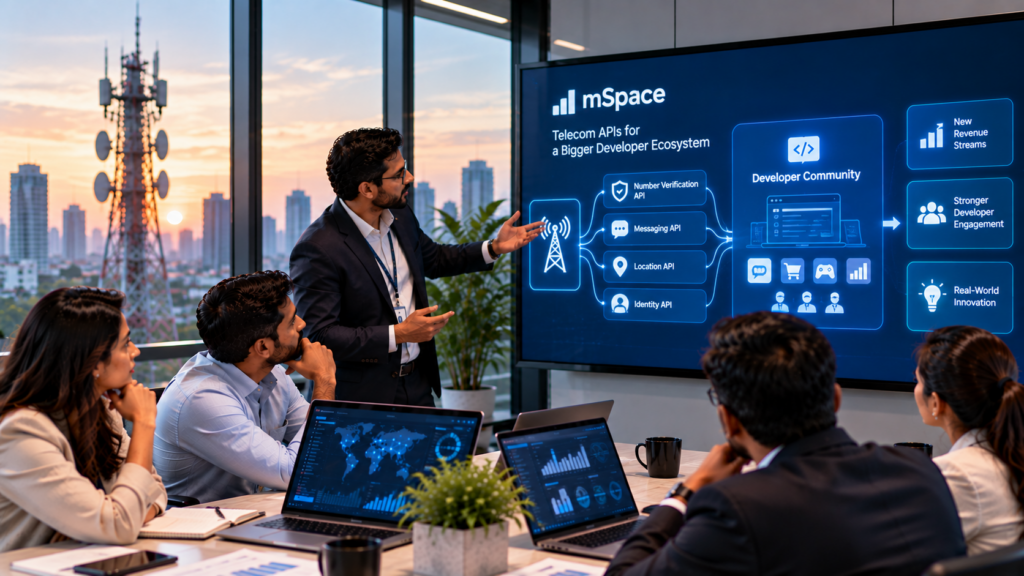
Mobitel worked with hSenid Mobile to build mSpace on hSenid CPaaS, creating an environment where developers and non-developers could build, launch and monetize digital services using telecom network capabilities.
The goal was not simply to expose APIs. It was to create an ecosystem where other people could build businesses on top of the network.
One platform, two ways to build
A major decision behind mSpace was not limiting app creation to experienced developers.
Developers use mSpace Inzpire. They can select telecom APIs, build their applications, submit them for approval and then take those services to market. Mobitel’s current mSpace journey still follows this model.
For users without coding experience, mSpace Xpand provides another route. They can create services such as alerts, voting applications, contact services and scheduled messages without building everything from code.
That matters commercially. The larger the pool of people who can create services, the more opportunities the operator has to generate usage from network assets that already exist.
The APIs became building blocks for businesses
The mSpace implementation exposed capabilities including SMS, USSD, Charging as a Service, subscriptions, OTP and location-based services.
That changed what a developer had to build.
Instead of creating messaging infrastructure from scratch, an application could use an SMS API.
Instead of developing its own authentication mechanism, it could use OTP.
Instead of building a separate payment process, charging capabilities could be integrated into the service.
The current mSpace API documentation still exposes services for SMS, USSD, OTP, subscriptions and location-based functionality.
For the developer, that means less time rebuilding telecom infrastructure.
For Mobitel, it means existing network capabilities can be consumed by more services.
The business model was built in
This is where mSpace becomes more interesting than a standard developer portal.
The creator is not only given the tools to build an application. There is a path to earn from it.
Mobitel’s mSpace instructions are straightforward: create the application, submit it for approval, market it and generate income.
The platform also supports revenue sharing. Registration is free, while service creators can receive an approved share of the revenue generated by their services. Mobitel determines the applicable revenue share according to the service category.
That aligns the incentives.
A creator has a reason to build and grow the service. The operator benefits when that service generates network usage and revenue.
Prabhath Gamage, General Manager Innovation, described the aim of the mSpace ecosystem as “enabling new sources of income for our community.”
That is the commercial idea in one sentence.
What changed for Mobitel
The mSpace case study shared for this article records four outcomes: new digital revenue opportunities, wider market reach, stronger user engagement and faster application development.
The mechanism behind those results is practical.
SMS APIs enable automated communication.
USSD lets services reach customers without depending on mobile data.
OTP supports secure user authentication.
Location APIs make context-aware services possible.
Subscription capabilities create a route to recurring revenue.
Instead of Mobitel building every digital service itself, mSpace opened those capabilities to an external community that could build on top of them.
That changes the operator’s role from being the sole creator of services to becoming the platform other businesses build on.
The wider platform numbers show what this model can scale into
The mSpace case study does not provide an approved mSpace-specific count for applications, developers or revenue. Those figures should not be invented or substituted with numbers from another operator deployment.
What we can verify is the scale of the wider hSenid CPaaS ecosystem.
hSenid currently reports more than 300 million API calls per month, more than 20,000 innovative service applications, more than 20,000 active developers and more than 10 million end users across its CPaaS deployments. These are platform-wide figures, not mSpace-only results.
That distinction matters.
A good case study should show what is known, not make one customer’s results look larger by borrowing numbers from another deployment.
What other telcos can take from mSpace
mSpace shows that telecom monetization does not have to stop with selling connectivity.
An operator can expose network capabilities, make them accessible to developers and non-developers, connect them to billing and subscriptions, and create a model where outside creators have a financial reason to keep building.
That creates a useful cycle.
More creators lead to more services. More services create more reasons for customers to use the network. Successful services generate income for their creators while creating additional revenue opportunities for the operator.
The network was already there.
mSpace turned access to it into a platform people could build businesses on.