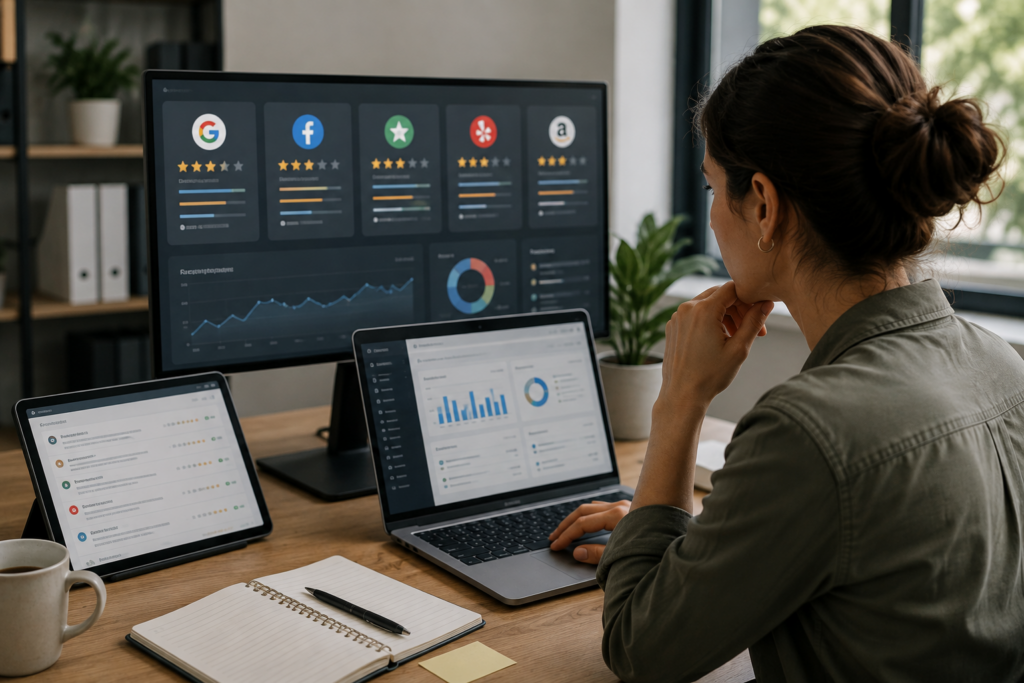
Customers rarely leave feedback in just one place. One person posts a Google review. Another comments on Facebook. Someone else leaves a detailed complaint in an app store. For businesses, this creates a simple but serious challenge: how do you keep track of every conversation without constantly switching between platforms?
When reviews are scattered across different channels, important complaints can be overlooked and responses can be delayed. Reputation Management Software helps businesses bring customer feedback into one view, making it easier to understand what customers are saying and where attention is needed.
Why Multi-Platform Review Monitoring Is Difficult
Monitoring reviews manually sounds manageable until the number of channels begins to grow.
Marketing teams may check social platforms. Customer service teams may handle complaints through other systems. Product teams may focus on app store reviews. As a result, customer feedback becomes fragmented across the organization.
This creates several problems. Teams may respond slowly to negative feedback, miss recurring issues, or struggle to understand overall customer sentiment.
hSenid Reputation Management is designed to address this challenge by monitoring, analyzing, and supporting responses to customer feedback across digital channels. It aggregates reviews from platforms such as Google, Facebook, and app stores to provide organizations with a clearer view of customer sentiment and emerging concerns.
Start With a Centralized View of Customer Reviews
The first step in effective review monitoring is bringing feedback together.
Instead of checking Google, Facebook, and app stores individually, organizations need a centralized place where reviews and complaints can be viewed and analyzed.
This is where Reputation Management Software becomes especially useful.
hSenid’s solution provides unified data collection by aggregating reviews and complaints from multiple platforms.
A centralized approach helps teams save time while reducing the chance that an important review gets missed.
It also gives different departments access to the same customer feedback, creating a more consistent understanding of the customer experience.
Use AI to Understand Sentiment Across Channels
Collecting reviews is only part of the process.
Businesses also need to understand what those reviews mean.
An AI review monitoring tool can help analyze customer feedback and identify whether sentiment is positive, negative, or neutral.
For example, a business may receive hundreds of comments across several platforms. Reading every review manually takes time, and patterns may be difficult to recognize.
hSenid Reputation Management applies AI-based sentiment detection across feedback sources, helping organizations identify sentiment trends across multiple channels.
Sentiment analysis for customer reviews gives teams a quicker way to understand how customers feel and whether negative sentiment is starting to increase around a particular topic.
Organize Reviews by What Customers Are Talking About
A good review monitoring process shouldn’t simply tell you that customers are unhappy.
It should help explain why.
Customers may repeatedly mention delivery delays, customer support, billing, technical problems, or service quality. These recurring topics can reveal where the customer experience needs attention.
hSenid Reputation Management includes topic analysis that identifies frequently mentioned keywords and recurring issues. It also provides trend insights to help organizations understand emerging patterns in customer feedback across channels.
With automated review analysis software, businesses can analyze larger volumes of feedback without relying entirely on manual review.
Categorize Feedback to Make Responses Easier
Not every customer comment is a complaint.
Some customers provide suggestions. Others raise concerns or simply share general feedback.
Treating all these comments the same way can make review management inefficient.
hSenid Reputation Management uses contextual classification to categorize customer comments into groups such as complaints, suggestions, concerns, and feedback. Structured insights then help teams understand customer intent and prioritize actions accordingly.
This makes multi-platform monitoring more practical because teams can focus on the type of feedback most relevant to their responsibilities.
Set Up Alerts for Critical Reviews
Checking dashboards continuously isn’t realistic.
Important negative reviews need to reach the right teams quickly, especially when they could develop into larger reputation risks.
The platform includes priority alerts for critical complaints and negative reviews and supports rapid responses before issues escalate.
This allows organizations to move from passive monitoring to a more proactive approach.
Rather than discovering a serious complaint days later, teams can identify priority feedback sooner and determine the right response.
Look for Trends, Not Just Individual Reviews
One negative review may represent an isolated incident. Similar reviews appearing repeatedly across several channels may indicate a bigger problem.
This is why Reputation Management Software should do more than collect customer comments.
It should help teams compare feedback, recognize recurring themes, and identify negative trends before they grow.
hSenid Reputation Management supports early issue detection, helping businesses recognize negative patterns before they become major reputation risks.
It also supports root cause identification, helping teams investigate underlying issues behind recurring complaints and feedback.
Turn Multi-Platform Reviews Into Actionable Insights
Online reviews contain useful information about customer expectations, frustrations, and experiences.
The challenge is turning that information into something teams can actually use.
By centralizing reviews, analyzing sentiment, detecting recurring topics, categorizing feedback, and highlighting critical complaints, businesses can build a clearer picture of what customers are experiencing across digital channels.
With Reputation Management Software, review monitoring becomes less about checking multiple websites and more about understanding customer feedback as one connected source of insight.