Diameter vs SIGTRAN: What Operators Need for 4G and 5G Interworking
SIGTRAN carries SS7 over IP; Diameter powers 4G. Compare the two and learn how operators keep legacy and next-gen networks talking without a rebuild.

Seamless SS7 over IP integration for telco operators.
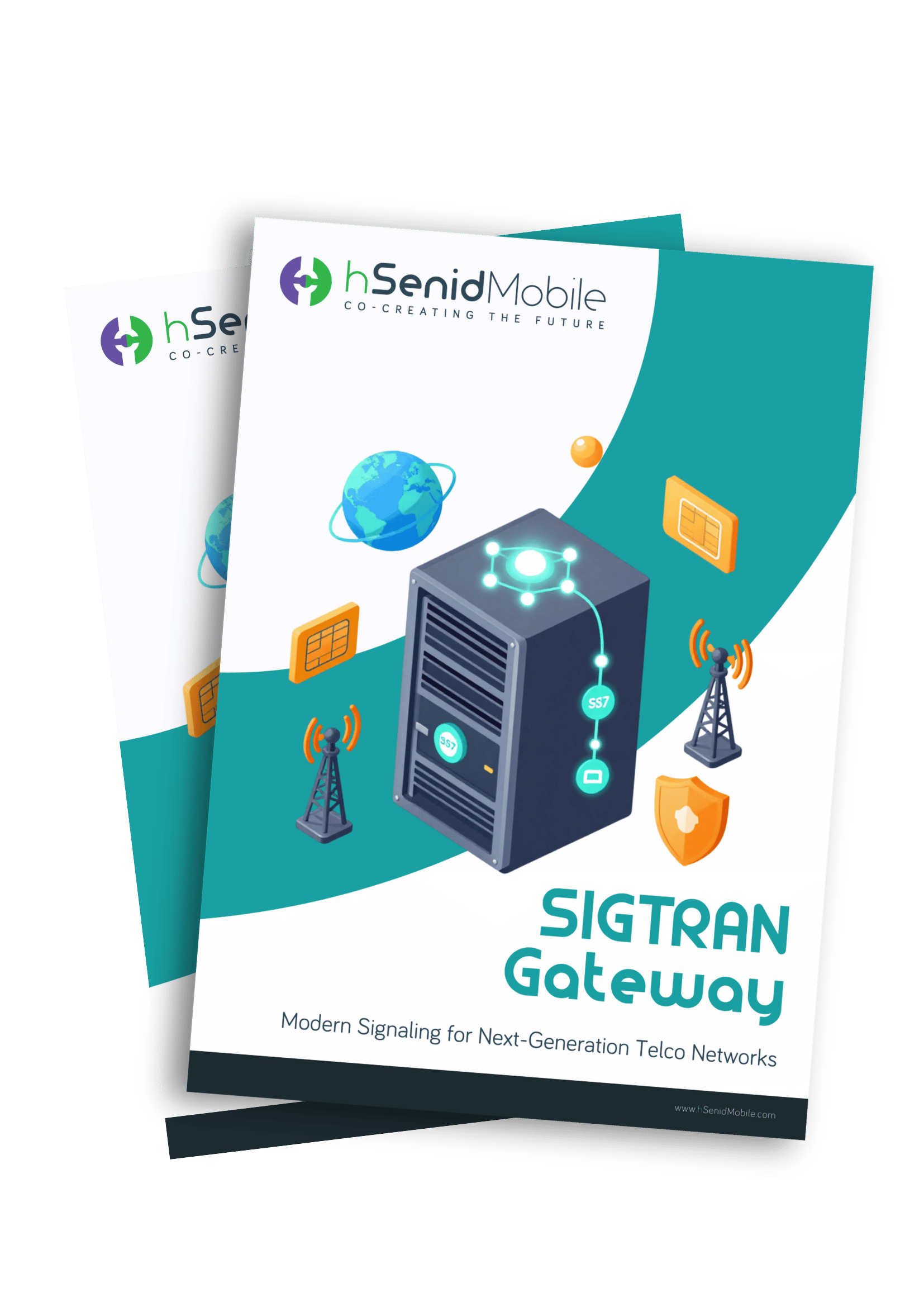
Bridge SS7 signaling over IP networks and reduce your deployment costs. hSenid Mobile's SIGTRAN Gateway is a high-performance, customizable platform built in-house, so you integrate with your existing network to support value added services without costly third-party stacks.

SS7 has been the standard for telco integration for over three decades, and your call control and value added services still depend on its core network triggers. SIGTRAN moves that signaling onto less costly IP networks, so you can build new services without the expense of traditional SS7.
A software-based SIGTRAN stack that hides the underlying complexity and opens up APIs, so you integrate services at a much faster rate. It is fully compatible with the SCTP, MTP, SCCP, TCAP and MAP layers for reliability and performance in core telecom functions.
An in-house built stack removes the need to purchase expensive third-party SIGTRAN stacks or SS7 cards.
A highly customizable stack that integrates with your existing operator environment.
Built with the features operators use most, with less overhead, reducing the cost of deploying a complex stack.
Seamlessly manages the signaling integration your value added services require.
Your internal applications use SIGTRAN calls and receive responses from the HLR and MSC over an HTTP API.
A loosely coupled architecture built for future expansion.
The gateway exposes the functions of the SIGTRAN stack you need as API calls, in two layers, giving you a loosely coupled architecture that is ready to grow.
HTTP calls that any application integrated with the SIGTRAN Gateway can make.
API calls the SIGTRAN Gateway makes to the core network, with responses returned from the HLR and MSC.
Your applications call these directly to reach subscriber and network information, without handling SS7 signaling themselves.
Send MT SMS to your subscribers.
Get authentication vectors from the HLR, used to authenticate users when mobile data is offloaded to public Wi-Fi.
Retrieve subscriber information from the HLR, including TeleServices, routing category and RDI.
Get the IMSI of a subscriber's MSISDN, even when the subscriber status is absent.
Find the IMSI of a subscriber.
Get the GT of a subscriber's current MSC.
hSenid Mobile's SIGTRAN Gateway has been used in real-world carrier-grade platforms over the years and is proven to work effectively.
Short Message Service Center integrations. See SMSC
Signaling integration for USSD services. See USSD Gateway
Signaling for location-based services. See LBS
HLR integration to extract authentication vectors.
MNP call control integration for fixed-line traffic.
Authenticate users when mobile data is offloaded to public Wi-Fi access points.
SIGTRAN, or SS7 over IP, transports SS7 signals over less costly IP networks. hSenid Mobile's SIGTRAN Gateway is a highly customizable, in-house built software stack that integrates with your existing operator environment and manages the signaling integration your value added services need.
No. The in-house built stack removes the need to purchase expensive third-party SIGTRAN stacks or SS7 cards, reducing your deployment costs.
A standard IP layer, Stream Control Transmission Protocol (SCTP), an adaptation layer (MTP), Signaling Connection Control Part (SCCP), Transaction Capabilities Application Part (TCAP) and Mobile Application Part (MAP).
Through an HTTP API with two layers. Direct API calls are HTTP calls any integrated application can make. Flow API calls are made by the gateway to the core network, with responses returned from the HLR and MSC.
Direct API calls include MtForwardSm, RestoreData, SendAuthenticationInfo, SendImsi, SendRoutingInfo and SendRoutingInfoForLCS, covering MT SMS, subscriber information, authentication vectors, IMSI lookups and MSC location.
It has been used for SMSC integrations, USSD Gateway integrations, location-based service platforms, HLR integration for authentication vector extraction, and MNP call control for fixed-line traffic. Book a demo to see how it fits your network.
See the full stack, both API layers and the Direct API calls available in one datasheet.
Talk to our team about bridging SS7 signaling over IP, reducing deployment costs and integrating with your existing operator network.
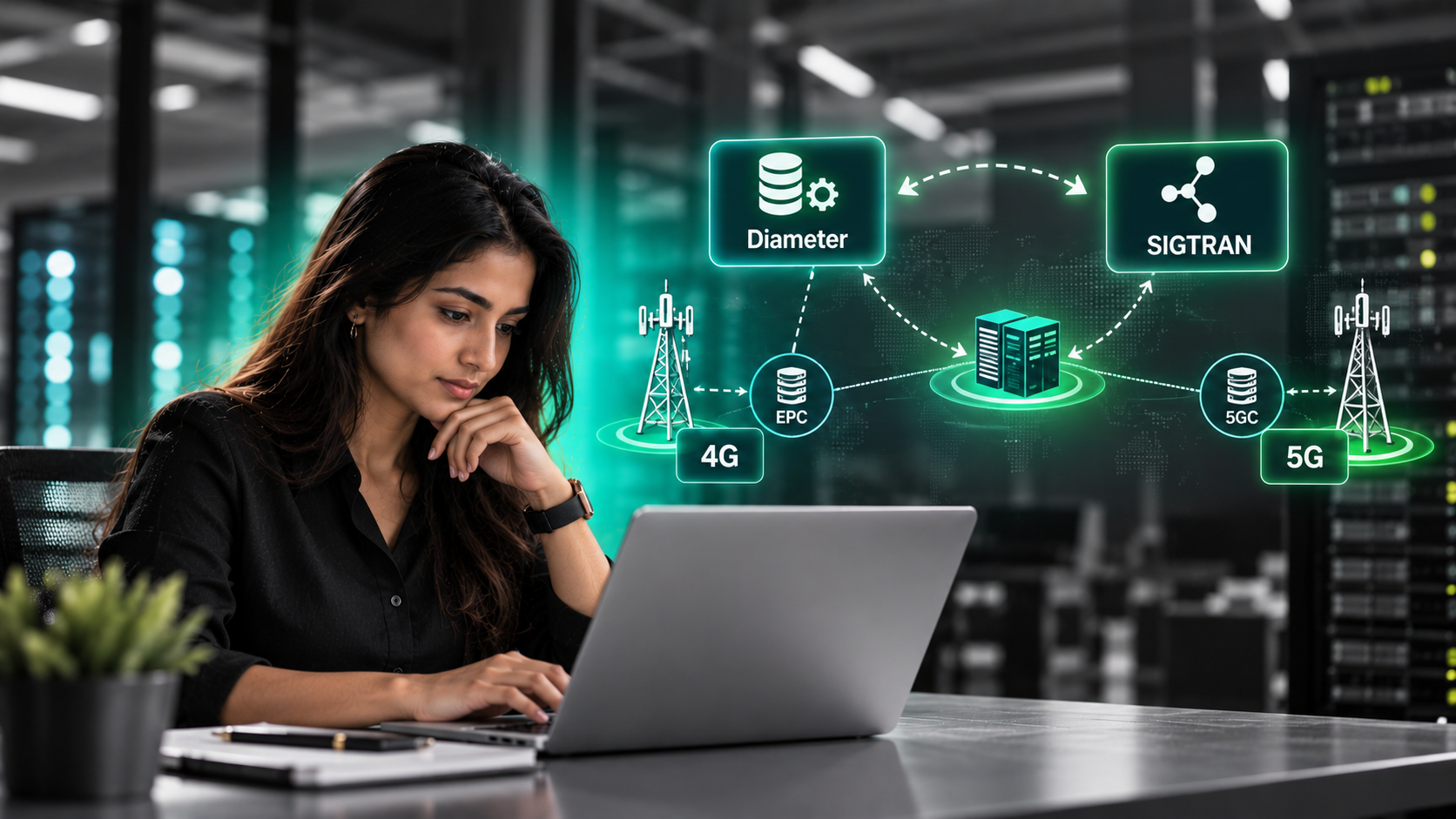
SIGTRAN carries SS7 over IP; Diameter powers 4G. Compare the two and learn how operators keep legacy and next-gen networks talking without a rebuild.

SS7 flaws let attackers track locations and intercept SMS. Learn how operators secure signaling with filtering, monitoring and a hardened SIGTRAN layer.

Telecom networks are built around complex signaling environments, and those environments rarely look exactly the same from one operator to another. Different core systems, service platforms, legacy infrastructure, and internal requirements create unique integration challenges. That is why flexibility matters. A SIGTRAN Gateway Solution built around a customizable architecture gives telcos greater control over how signaling functions are exposed, integrated, and expanded across their network.

Choosing the right signaling partner is a strategic decision for any telecom operator. A gateway sits between applications and critical network functions, so the wrong choice can introduce integration delays, unnecessary costs, and long-term dependency on rigid infrastructure. The right SIGTRAN gateway provider for telecom operators should make signaling integration simpler, more flexible, and easier to expand as new services are introduced.

Telecom innovation often depends on what happens deep inside the network. New messaging services, location-based applications, authentication flows, and other value-added services may look simple to customers, yet they rely on complex signaling interactions behind the scenes. When the signaling layer is difficult to integrate, expensive to expand, or dependent on proprietary infrastructure, even a promising service can take longer to reach the market. A flexible SIGTRAN Gateway Solution can help operators modernize this critical layer without forcing them to rebuild everything around it.

A clear look at SIGTRAN’s role in modern telecom: translating SS7 over IP to power SMS, USSD, and authentication while reducing hardware spend and downtime.

Optimize SIGTRAN traffic with best-practice monitoring, actionable metrics, and tool choices that deliver reliability, performance, and effortless scale.

Learn how to monitor SIGTRAN traffic like a pro with best practices and tools. Discover the power of the hSenid SIGTRAN Gateway for efficient traffic management and scalability.

Learn how to monitor SIGTRAN traffic like a pro with best practices and tools. Discover the power of the hSenid SIGTRAN Gateway for efficient traffic management and scalability.

Discover how hSenid Mobile’s SIGTRAN Gateway breathes new life into legacy SS7 networks. Transform costly, rigid infrastructure into a scalable, API-driven, future-ready platform that supports SMS, USSD, roaming, IoT, and more, all while reducing costs and unlocking innovation.

Even a single SIGTRAN error can disrupt calls, SMS, and mobile services, costing telecoms millions. Discover how hSenid Mobile’s SIGTRAN Gateway ensures resilience, scalability, and error-free signalling for future-ready networks.

Even in the 5G era, telcos still count on SIGTRAN to keep SMS, roaming, mobile money, and voice services running smoothly across networks.