
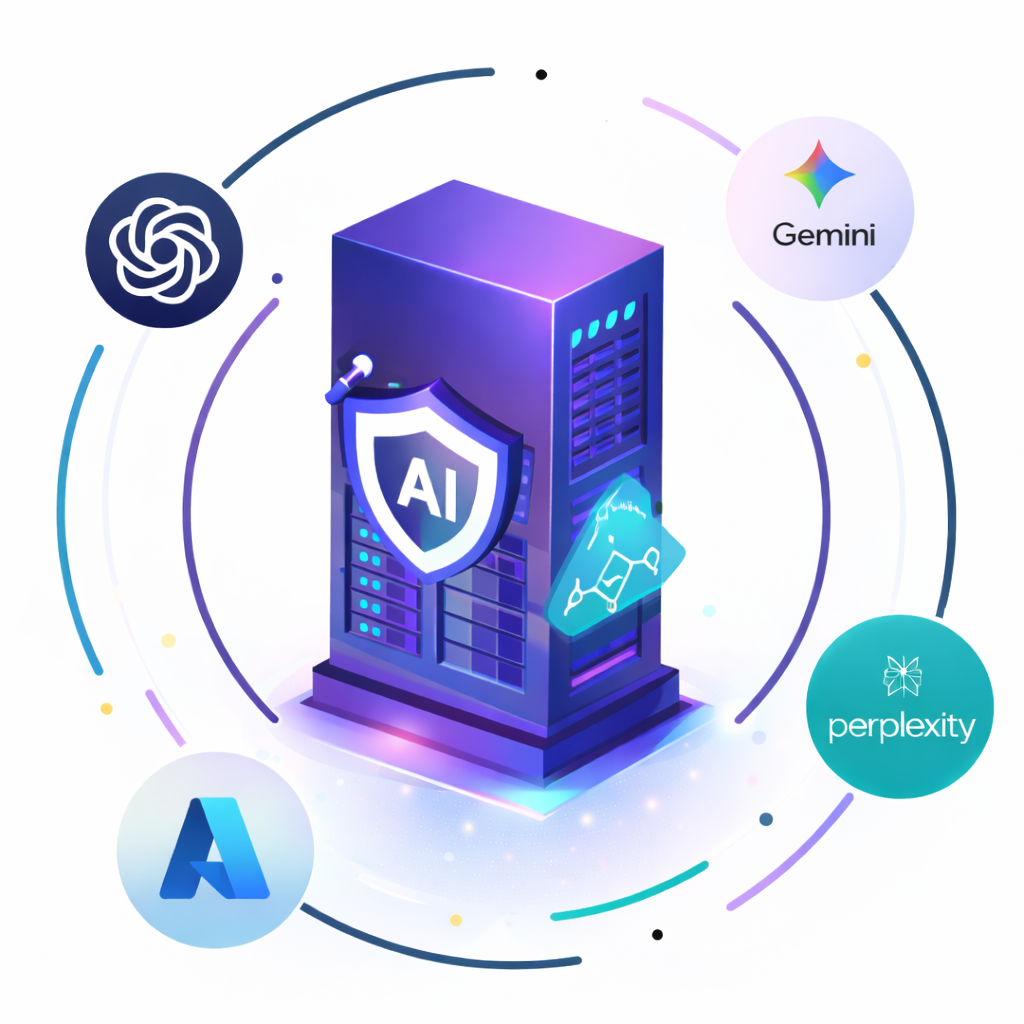
AI is now sitting inside daily work. Legal teams summarize contracts. HR teams screen CVs. Support teams turn call recordings into action points. Finance teams ask models to explain numbers.
Useful? Yes. Risk-free? Not really.
If your employees are putting customer data, contracts, internal policies or code into a model your company does not control, then the AI may be helpful, but it is not fully yours. That is why Sovereign AI matters.
McKinsey’s 2025 AI survey found that 88% of organizations use AI regularly in at least one business function, but only about one-third have begun scaling AI programs. So adoption is fast, but control is still catching up. McKinsey also says 23% of respondents are scaling agentic AI systems and another 39% are experimenting with them. That is where things get serious, because agents can do more than answer. They can browse, call tools and trigger actions.
The real issue is not “using someone else’s model”. Enterprises will use OpenAI, Gemini, Azure-hosted models, open-source LLMs and local models. That is normal. The issue is whether the company controls how those models are accessed, what data leaves, who uses what and how much it costs.
hSenid’s Sovereign AI guide explains the same problem clearly. Employees already use external AI tools without visibility, creating shadow AI risk. The guide also highlights practical controls like multi-model routing, data masking, budget control, centralized key management and sandboxed agent execution.
And this is not a small security concern. IBM’s 2025 Cost of a Data Breach report says the global average breach cost is USD 4.4 million. It also reports that 97% of organizations with an AI-related security incident lacked proper AI access controls, while 63% lacked AI governance policies to manage AI or prevent shadow AI.
So blocking AI is not the answer. People will still find tools. The better answer is a governed AI gateway.
A proper Sovereign AI platform should let your business:
- Route the right task to the right model
- Mask sensitive data before it goes outside
- Run private workloads on local or on-premise models
- Track usage by user, team and department
- Apply quotas so token costs do not run wild
- Run agentic AI in sandboxed environments
That last part matters. A chatbot that writes an email is one thing. An AI agent that can open files, browse systems or execute commands is another level of risk.
This is also why infrastructure matters. Sovereign AI is not only a policy document. It needs a reliable platform underneath it.
For many enterprises, that means OpenShift and Kubernetes. AI workloads need secure deployment, scaling, observability, integration and cost visibility. Red Hat’s 2024 Kubernetes security report, based on 600 DevOps, engineering and security professionals, found that 67% delayed or slowed application deployment due to container or Kubernetes security concerns, and 90% had a DevSecOps initiative underway.
That is where the right partner makes a difference. The best OpenShift consulting company should not just install clusters. It should understand AI governance, platform security, GPU usage, identity, cost, migration and operations.
A strong OpenShift migration partner helps move legacy apps and data services into a modern foundation without breaking production. Good Kubernetes consulting services help teams avoid fragile deployments and poor security patterns. RHEL support services keep the OS layer stable. Ansible automation consulting removes manual work from provisioning, patching and recovery. OpenShift managed services keep the platform monitored and updated. And yes, OpenShift cost optimization matters because AI usage can quietly become expensive, especially with token usage and infrastructure scaling.
This is what real enterprise Kubernetes platform consulting should look like. Not just “we can deploy containers”. More like “we can help you run governed AI safely across the enterprise”.
So, is AI really yours if it runs on someone else’s model?
It can be. But only if the control layer is yours.
If employees go directly to public tools, it is not yours. If a single vendor locks you in, it is not fully yours. If sensitive data leaves before policy checks happen, it is not yours. But if every AI request flows through a governed platform with masking, routing, audit logs, cost control and sandboxing, then your enterprise is back in control.
That is the point of Sovereign AI. Don’t block AI. Own it properly.