
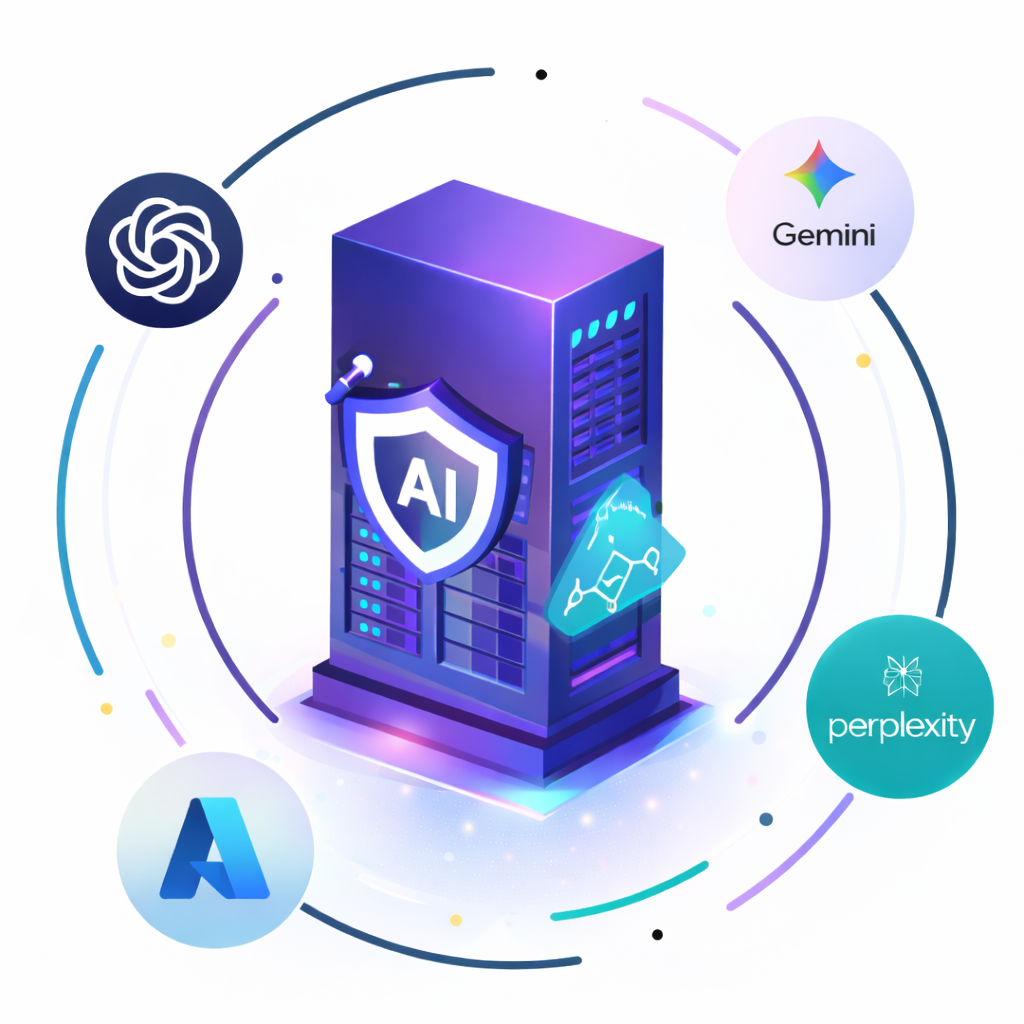
AI adoption inside enterprises is moving faster than most leadership teams expected. One day it’s a pilot project, next thing you know half the company is experimenting with tools on their own.
That’s where things get messy.
You’ve probably already asked questions like:
- how do I know if my staff are using AI tools
- are there AI tools employees using without IT approval
- what happens when employees using ChatGPT with company data
And honestly, those concerns are valid. According to a 2024 McKinsey report, over 65% of organizations are actively using generative AI, but only a small portion have proper governance structures in place.
So the real challenge isn’t adoption. It’s control without slowing everything down.
That’s exactly where an AI Governance Gateway comes into play.
The Hidden Problem: Innovation Is Happening Anyway
Let’s be real for a second. Blocking AI doesn’t work.
If teams feel like official tools are too slow or restricted, they’ll find their own way. Marketing teams use ChatGPT for content. HR experiments with resume screening. Developers try out code assistants.
This is what many companies are now calling shadow AI.
The risk isn’t just theoretical. A Samsung incident in 2023 showed how employees accidentally leaked sensitive data into ChatGPT. Since then, over 70% of enterprises report concerns around AI data leakage.
The instinctive reaction is to lock things down.
But that creates a different problem.
Innovation slows. Teams get frustrated. Adoption becomes fragmented.
So instead of asking “how to stop shadow AI in enterprise”, the better question is:
How do you guide it?
Why Traditional Governance Models Fail with AI
Most companies try to apply existing IT governance models to AI. Approval workflows, restricted environments, heavy compliance layers.
It sounds safe, but in practice, it breaks things.
AI is different because:
- It’s fast. People expect instant results
- It’s decentralized. Every team has different use cases
- It’s evolving constantly. New models, new tools every month
Trying to control it with rigid policies just pushes usage underground.
That’s why companies are shifting toward centralized AI access control enterprise models instead of blocking usage entirely.
What an AI Governance Gateway Actually Does
Think of an AI Governance Gateway as a control layer, not a restriction layer.
Instead of stopping people from using AI, it routes everything through a managed system.
Enterprises need a central platform that orchestrates multiple models, applies policies, and manages access across the organization.
That sounds technical, but the idea is simple.
Everyone can use AI, but:
- Requests go through a central gateway
- Data is checked before leaving the system
- Usage is tracked and controlled
- The right model is selected for the task
It’s like giving everyone access, but with guardrails in place.
The Core Components You Actually Need
If you’re thinking about building this, don’t overcomplicate it. There are a few key things that matter.
1. Multi-Model Access Without Chaos
Different teams need different tools.
Legal teams might need document-heavy models. Marketing teams prefer content generation. Developers need coding assistants.
A good system allows multi-model AI management without forcing everyone into one tool.
The Sovereign AI approach highlights this clearly. Requests can be routed to:
- on-premise models for sensitive data
- cloud-hosted models for scalability
- external APIs when needed
This flexibility is what keeps innovation alive.
2. Built-In Data Protection
This is where most companies struggle.
If someone pastes confidential data into a public AI tool, you’ve already lost control.
A proper AI gateway enterprise setup ensures:
- data masking before external requests
- redaction of sensitive information
- policy enforcement before anything leaves
So even if employees use powerful external models, your data stays protected.
3. Visibility Into AI Usage
Here’s something many leaders underestimate.
AI costs money. A lot of it.
LLMs are priced based on tokens, and usage can vary wildly between teams. The Sovereign AI guide explains how different departments like legal or HR can consume significantly different levels of resources.
Without visibility, budgets spiral.
With the right setup, you get:
- AI usage monitoring employees activity
- team-level tracking
- LLM token budget management enterprise controls
This turns AI from an uncontrolled expense into something manageable.
4. Safe Environments for Advanced AI
Agent-based AI is becoming more common. These tools can:
- browse the web
- execute commands
- interact with files
That’s powerful, but also risky.
Instead of banning them, companies are using sandboxed environments. The Sovereign AI model recommends controlled execution environments with monitoring and isolation to reduce risks.
So teams can experiment, without exposing the entire system.
Where Infrastructure Comes Into Play
This is the part many teams overlook.
You can’t build scalable AI governance without the right backend.
That’s why companies often rely on:
- Kubernetes consulting services for scalable orchestration
- OpenShift managed services for enterprise-grade deployments
- Ansible automation consulting to streamline workflows
These aren’t just technical add-ons. They’re what make governance practical at scale.
For example, if you’re running multiple AI models across environments, you need an enterprise Kubernetes platform consulting approach to manage workloads efficiently.
And if you’re migrating workloads, having an experienced OpenShift migration partner helps avoid downtime or misconfigurations.
Real Talk: Governance Doesn’t Mean Slowing Down
There’s a misconception that governance adds friction.
Done wrong, yes. Done right, it actually speeds things up.
When teams don’t have to guess:
- which tools are allowed
- how to handle data
- whether they’re compliant
they move faster.
A centralized approach removes uncertainty.
Instead of asking for approvals every time, teams just use the system.
That’s the difference between restrictive policies and an actual AI Governance Gateway.
A Simple Framework to Get Started
If you’re figuring this out internally, don’t try to solve everything at once.
Start with this:
Step 1: Identify current AI usage
Find out what tools people are already using. You’ll probably be surprised.
Step 2: Define baseline policies
Not heavy documentation. Just clear rules around data usage and access.
Step 3: Introduce a central access layer
This is where the gateway comes in. Route AI usage through one system.
Step 4: Add monitoring and budget controls
Track usage early before it becomes a cost issue.
Step 5: Expand safely
Enable more tools, more models, but within the governed environment.
The Bigger Picture
AI isn’t slowing down.
Gartner predicts that by 2026, over 80% of enterprises will have used generative AI APIs or models in production environments.
The question is not whether your teams will use AI.
They already are.
The question is whether you can guide that usage without killing the momentum.
That’s what an AI Governance Gateway is really about. Not control for the sake of control, but enabling innovation in a way that’s safe, visible, and scalable.
Final Thoughts
If your current approach is either “block everything” or “let everyone figure it out”, you’re sitting at two extremes that don’t work long term.
The middle ground is smarter.
A governed, flexible system where teams can experiment freely, but within clear boundaries.
That’s how you build trust in AI internally.
And that’s how innovation actually scales.